Tarot Cards
Guides, Card Meanings & Reading Practice
Tarot is the conversation a deck has with you when you stop pretending you don’t already know the answer. I’ve kept cards on my altar, in my writing room, and in my pocket for almost twenty years — sometimes as miniature vision boards, sometimes as divination, sometimes as the visual shorthand I use to think a character into existence. What follows is the full archive: how the cards work, what specific cards mean to me across more than a dozen different decks, the spread that finally retired the Celtic Cross for me, and the card-by-card Novel Tarot series I drew chapter-by-chapter for The Lost Teachings of Dead Monks.
Foundations · Major Arcana · Cups & Wands · Swords & Pentacles · Oracle Cards · Spreads · Hard Truths · Resources
Tarot: A Quick Guide
How does tarot actually work?
Tarot is a structured intuition tool, not a fortune-telling slot machine. A deck of seventy-eight images gives the reader’s intuition something concrete to project onto — patterns, archetypes, and symbols that organize what the reader already half-perceives. The cards don’t predict the future. They describe the present so honestly that the future starts to take a recognizable shape.
Can I read tarot for myself?
You can — but it’s the hardest read you’ll ever do, because your own ego edits the deck before you finish shuffling. Most experienced readers will tell you their personal readings are the least accurate ones they do. The cards are clearest when there’s distance between the reader and the question.
Do reversed cards always mean the opposite?
No. Reversed cards usually mean the same archetype turned inward, blocked, delayed, or in shadow — not literally inverted. A reversed Lovers isn’t a breakup; it’s a choice unmade. A reversed Strength isn’t weakness; it’s strength that hasn’t been claimed yet. The honest answer is that readers disagree, and your reading of reversals will evolve with practice.
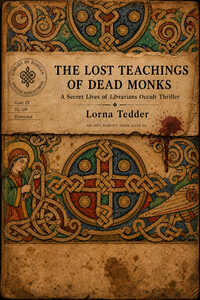
Every card in the Novel Tarot series was drawn for a specific chapter of my novel The Lost Teachings of Dead Monks — the cards were the way I listened to the book as I wrote it. Available wherever ebooks are sold, or from the bookshelf.
Start Here: Understanding Tarot
Tarot has two halves: the seventy-eight cards (a fixed library of archetypes) and the reader (a moving instrument that picks up what the cards point toward). Most readers come for the first half — what does this card mean, what does this spread predict — and stay for the second, where the practice actually lives.
If you’re new to tarot, the Foundations section is the place to start. If you’re here for a specific card or a specific question, jump straight to the suit or section that fits. The Novel Tarot series — one card per chapter of The Lost Teachings of Dead Monks — threads through every suit and arcana below.
Foundations: How Tarot Works
Start here if you’re new to tarot, or if you’ve been pulling cards for years without ever locking down a working theory of how the deck actually does what it does.
- Tarot Cards: A Mystical Tool for Seeing the Future or Seeing Within — The foundational essay. Tarot as vision board, magical tool, manifestation focus, and divination guide — all at once, all valid, all in conversation with each other.
- Why You Can’t Read Your Future for Yourself (and Sometimes for Others) — Why even gifted intuitives can’t read their own decks. Lorna unpacks the ego edit that shows up between shuffle and spread, and why the cards stay clearest at a distance.
- Changing the Cards You’re Dealt — The hinge essay between tarot-as-divination and tarot-as-manifestation. Not changing the cards already on the table — changing the cards you’re about to be handed.
- Spiritual Tools and Forging Your Own Meaning — Tarot as one tool among many in a working Book of Shadows, and why the meaning you forge for yourself outlasts the meaning the booklet hands you.
- Changing the Negative to Positive with Visual Aids — Tarot on the altar as visualization practice. The five-card arrangement Lorna kept on her bedroom altar to anchor what she was manifesting, and what shifted when the cards started shifting back.
Major Arcana Card Studies
The twenty-two cards that carry the big archetypes — the Fool, the Lovers, the Hierophant, Justice, Strength, Judgment. Some of these are read straight; some are read intuitively against a specific character or moment.
- Novel Tarot: The Fool – Rider-Waite Deck — The opener of the Novel Tarot series. The Fool drawn for Chapter 1 of The Lost Teachings of Dead Monks — “Too Near the Edge” — and what the most archetypal first-step card says about the protagonist’s leap.
- The High Priestess Speaks of Initiation — Written as a Third Degree High Priestess, this reads the High Priestess card against years of teaching, initiating, and turning away the students who wanted the wrong kind of power.
- Novel Tarot: The Hierophant – Revelations Tarot — The Hierophant drawn for Chapter 3 “The Truth about Liars.” Lorna explains why she wouldn’t normally read this card for Raven Darbyshire — and what made the Revelations deck change her mind.
- Novel Tarot: Hierophant – Tarot de la Nuit — A second Hierophant draw for the same character in Chapter 17 “Between His Hands.” Demonstrates how the same card from a different deck reads when the same figure shows up at a turning point.
- The Lovers Card — The Lovers card written from the dating-after-40 frame. What this card actually means when both people are carrying twenty years of baggage into the reading.
- Novel Tarot: The Lovers – Sirian Starseed Tarot Deck — The Lovers drawn for Chapter 8 “Choices.” A reading of how the Sirian Starseed deck’s framing of partnership lands differently from the traditional Rider-Waite imagery.
- Novel Tarot: Strength – Guardian Tarot — Strength drawn for Chapter 13 “No Longer Deniable,” at the breakup beat. What Lilah needs in the days after — and why this card answered before she could form the question.
- The Justice Card in Tarot: That Integrity Thing — Justice read as integrity rather than fairness, written from the community Lorna found among Pagan readers in the late 2000s.
- Novel Tarot: Judgment – Labyrinth Tarot — Judgment from Luis Royo’s Labyrinth Tarot, drawn for Chapter 12 “No Hero.” An intuitive read that pulls the card away from its standard resurrection meaning into something quieter and harder to name.
Minor Arcana: Cups & Wands
Cups for the heart, Wands for the will. The suits where most readings spend most of their time.
- Drawing the Two of Cups — Two of Cups from the Arthurian Tarot deck. The card pulled twice in a single month — and what it told her about the man she was already half in love with before she finished shuffling.
- Novel Tarot: Two of Cups – Llewellyn Tarot — The last card Lorna drew for The Lost Teachings of Dead Monks. Two of Cups from the Llewellyn deck for the Epilogue — hope for wholeness, drawn for Lilah and Raven.
- Novel Tarot: Ace of Cups – Tarot de la Nuit — Ace of Cups drawn for Chapter 18 “Lying in Wait.” Where Charlie’s heart is in this chapter — and the answer is not where Lilah hopes it is.
- Novel Tarot: Queen of Chalices – Tarot of Sexual Magic — Queen of Chalices for Chapter 15 “Devil in the Crossroads.” A reading of indecision and the moving crossroads that follows you until you choose.
- Novel Tarot: Knight of Cauldrons – Celtic Tarot — Knight of Cauldrons for Chapter 7 “One Door from Disaster.” Same Celtic deck, same chapter pairing as Chapter 6, this time read from Charlie’s side of the relationship.
- The Passionate Queen of Wands — A reading on the road. The Queen of Wands and the Lovers laid out together for a man who’d never seen tarot before, and what the cards showed about what was forming between them.
- Novel Tarot: Six of Wands – Reverse Tarot — Six of Wands for Chapter 14 “Over.” Another six — sixes meaning a restoring of balance — and what Charlie’s particular addiction to support reveals about the breakup.
Minor Arcana: Swords & Pentacles
Swords for thought, conflict, and what the mind insists on seeing. Pentacles (here, “Shields”) for the earth and what’s actually being built.
- Novel Tarot: 2 of Swords – Shadowscapes Tarot — Two of Swords for Chapter 9 “Seeing Too Much.” A reading on opposition and the blindfold the figure keeps choosing not to remove.
- Novel Tarot: 3 of Swords – Shadowscapes Tarot — Three of Swords for Chapter 10 “A Casting of Cards.” The progression from twos to threes — and what Lilah finally understands about the future of the relationship.
- Novel Tarot: 6 of Swords – Heaven & Earth Tarot — Six of Swords for Chapter 11 “Muddled.” A man guiding a boat across water with passengers, the swords still standing — Charlie’s muddled head-space rendered in a single image.
- Novel Tarot: 8 of Swords – Celtic Tarot — Eight of Swords for Chapter 2 “The Crossroads of Trust.” A young woman bound, blindfolded, with swords around her and uneven ground under her feet — and how clearly the figure reads as the chapter’s central character.
- Novel Tarot: 9 of Swords – Dark Wood Tarot — Nine of Swords for Chapter 4 “Red Flags.” The classic late-night anxiety card from a deck whose dark wood imagery makes the message harder to deflect.
- Novel Tarot: Queen of Swords – Witches Tarot — Queen of Swords for Chapter 21 “Confrontation.” A single sentence’s worth of card and a full chapter’s worth of reckoning.
- Novel Tarot: Knight of Shields – Celtic Tarot — Knight of Shields (Pentacles) for Chapter 6 “Someone to Lean On.” Two consecutive chapters in Lilah’s point of view, both drawing from the Celtic Tarot — and what shows up when the deck answers the same person twice in a row.
Oracle & Affirmation Cards
Not tarot proper — but the oracle and blessing decks Lorna pulls from when a chapter or a moment needs a single-word answer instead of a full archetype.
- Novel Tarot: A Blessing to Shield and Safeguard You – Blessed Be Celtic — A blessing card for Chapter 5 “A Mix of Death and Gods,” chosen to read how a new friendship blesses the protagonist rather than how it warns her.
- Novel Tarot: Clarity – Sacred Earth Oracle — Clarity for Chapter 16 “Omnipresence.” A Daeganean concept — “all time is now” — rendered as an oracle card because the archetype is too clean for the standard 78.
- Novel Tarot: Dependability – Sacred Earth Oracle — Dependability for Chapter 22 “The Gift of Friendship.” What Lilah has actually found in the Daeganean priesthood at the Darbyshire Memorial Scholar’s Library.
- Novel Tarot: Closure – Spellcasting Oracle — Closure for Chapter 19 “One Last Try.” A card drawn for what Lilah needs more than anything else — not love, not purpose, not justice. Closure first.
- Novel Tarot: Trust – Spellcasting Oracle — Trust for Chapter 20 “Between Crossroads and Cliffs.” The companion card to Closure — what Charlie needs at the same beat Lilah is asking for an ending.
Spreads & Reading Practice
The mechanics. How to actually lay cards down, and why the spread you reach for first might not be the one the question wants.
- 10 Tarot Spreads That Aren’t the Celtic Cross — The reference post. Ten spreads — Three-Card, Horseshoe, Relationship, Year Ahead, and seven others — each with positions, focus, and the situations they were built for.
- Long-Distance Relationships, Says the Tarot, and Why That’s Just Fine — A reading done in community, around a table, the way Lorna actually does her best card work. Long-distance relationships read honestly against the deck — and the answer the cards keep giving that everyone keeps re-asking.
For the cards that keep landing on the same fated meeting — the Lovers, the Tower, the Wheel — see the Vertex and Anti-Vertex Astrology Hub, where the same turning points show up in the natal chart.
When the Cards Tell You What You Didn’t Want to Hear
The honest counterpart. Tarot doesn’t only confirm what you hoped. Sometimes the deck names the thing you were trying not to know.
- Last Straws — A clairvoyant friend reads Lorna’s life path and chuckles before answering. Three weeks later, the cards land in a way that names exactly what she hadn’t said out loud.
- Spiritual Paths and Rocky First Steps — A Wiccan-degree-training reading that turned into a different kind of reading: who’s ready, who isn’t, and what the cards reveal about the difference.
- Energy Work: Winds of Change? — The five-card altar arrangement Lorna had been using for manifestation starts shifting on its own. A reading on what’s blowing through and whether to grip the cards harder or let them turn.
Resources
The decks and references behind most of these readings.
- Rider-Waite-Smith Tarot — The foundational deck. If you’re learning meanings, learn them here first.
- Shadowscapes Tarot (Stephanie Pui-Mun Law) — One of Lorna’s most-pulled decks for fiction work; pulled for several of the Sword-suit chapters.
- Celtic Tarot Deck — Used heavily across the Novel Tarot series for chapters anchored in earth and water.
- Tarot de la Nuit — A nocturnal deck Lorna draws from when a chapter needs darker, quieter imagery.
- Sacred Earth Oracle Deck — The non-tarot oracle Lorna reaches for when the archetypes need a single word, not seventy-eight.
Closing Thoughts
Almost twenty years of cards on the altar, in the writing room, in my pocket. The thing I trust the deck for has narrowed. Not prediction — the cards are bad at prediction in any literal sense. Description. A way of putting language on the thing I half-knew before I sat down. The Novel Tarot series is the cleanest version of this practice I’ve found: one card, one chapter, one character, no agenda. The deck doesn’t lie when it doesn’t have to. Bookmark the page if you want — I’ll keep adding cards as long as I keep writing novels worth drawing for.
Want every Tarot post I’ve ever written? Browse the full Tarot archive.
Featured Book
Every card in the Novel Tarot series was drawn for a specific chapter of The Lost Teachings of Dead Monks — a novel about a Southern researcher named Lilah Dane and the Last Priest of a long-dead god she shouldn’t have been able to find. The cards were the way I listened to the book as I wrote it. Find it on the bookshelf.