
Empaths
A Guide to Living as a Highly Sensitive Person
An empath is someone who picks up other people’s emotions and energy the same way most people pick up the weather — usually without meaning to, sometimes faster than the room realizes its own mood has shifted. I’ve been writing about this since 2008, before the word “empath” was on everyone’s TikTok. What follows is the archive: what empathic abilities actually feel like from the inside, the energy vampires and narcissists who find us, the shielding techniques that work and the ones that don’t, and the honest record of what it costs to be the one who feels everything in the room before anyone else does.
Foundations · Vampires & Narcissists · What We Pick Up · Shielding · Hard Reads · Living It · Resources
Empaths: A Quick Guide
What is an empath?
An empath is a person whose nervous system registers other people’s emotions as if they were their own. Not metaphorically — physically. Empaths feel grief in the chest, anger in the gut, anxiety as a static charge across the skin. Around 15-20% of people meet the clinical description of “highly sensitive person,” and a subset of those experience the more porous version commonly called empathic.
Why do empaths attract narcissists?
Because empaths are wired to look for the feeling behind the words, and narcissists are wired to perform the feeling that gets them what they want. The match is mechanical, not romantic — an empath assumes the warmth is real because they can feel themselves responding to it; the narcissist supplies just enough warmth to keep the empath providing supply. Naming the pattern is usually the first step out.
Can empaths protect themselves?
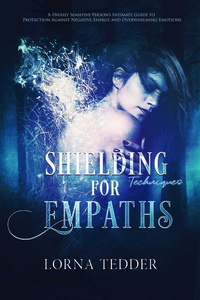
Yes — but not by walling off, which most empaths instinctively try first and which doesn’t last. Effective shielding is about regulating which signals you let through and which you don’t, the same way you choose to listen to one conversation in a crowded restaurant instead of all of them. The technique is teachable; the practice takes years. My ebook Shielding Techniques for Empaths lays out what’s actually worked for me.
For the structured techniques behind every essay in this hub — chakra-by-chakra leash-cutting, the daily grounding work, the practices that have kept me functional through twenty years of empathic life — see my book Shielding Techniques for Empaths. Available wherever ebooks are sold, or from the bookshelf.
Start Here: Understanding the Empathic Life
Being an empath has two halves: the perception itself (what arrives, and how it lands in the body) and the practice of working with it (shielding, grounding, naming what’s yours and what isn’t). Most readers come for the first half — trying to figure out why they feel everything so much — and stay for the second, where the work actually lives.
If you’re new here and trying to figure out whether you’re an empath, start with Foundations. If you already know and you’re here for a specific situation — the narcissist in your life, the shielding technique that’ll actually hold, the grief that isn’t yours — jump to the section that fits.
Foundations: What It Means to Be an Empath
Start here if you’ve recently realized you might be an empath, or if you’ve used the word for years without locking down what it actually means.
- Empathic Abilities and Connections: “The Feeling” — The foundational essay. Empathy as a literal energetic connection between people, the kind that lets you feel a terminally-ill friend’s exhaustion or a new lover’s chemistry from across a room.
- Indigo Children, Unusual Sensitivities & Living the Paranormal Life — Written in 2008 about the Scorpio Generation kids walking into Lorna’s house and feeling the buzz before they reached the crystals. A long-form essay on what gets called Indigo, what gets called sensitive, and where the lines actually fall.
- Hurricane Gustav and Mother Nature’s Animal/Insect Warnings — Empathic perception as weather radar. The energetic disturbance that built around Hurricane Gustav while it was still a blip in the Atlantic — and the way animals, insects, and empaths register the same incoming pressure.
- The Empath’s Paradox — The short essay that names the trade-off: an empath knows when their kid is upset before the kid swears she’s fine — and pays for that gift in every other interaction where the broadcast isn’t welcome.
Energy Vampires & Narcissists
The two patterns that find empaths fastest and cost the most. Lorna’s signature ground here, written from the lived side rather than the diagnostic textbook.
- Starving the Energy Vampire (aka Deflating the Drama Queen Effect) — A long-form post on the people who feed on attention and the empaths who provide it without realizing. Opens with a love story and closes with the mechanics of cutting off the supply.
- The Relationship Between Empaths and Narcissists — Why the two keep finding each other, what the dynamic actually looks like on both sides, and the difference between a clinically diagnosed narcissist and someone who’s merely self-absorbed.
- Course Corrections — A reframe for the small wrongnesses an empath registers — the server’s tone, the underhanded business move, the BankAmerica billing error — as signals to course-correct rather than situations to endure.
What Empaths Actually Pick Up
The signal itself. What gets received, how it arrives, and what to do with information you weren’t supposed to have.
- Psychic Spying: Revealing Your Own Secrets by Mistake — A psychic at a Florida festival hands Lorna a flyer marked NO PSYCHIC SPYING. The post that follows examines what it means to find yourself reading something you didn’t intend to read — and why the ethics of empathic perception aren’t simple.
- Psychic Connections Know No Bounds — Can you feel a connection across time and space? Two years ago, two years from now? A short, open-ended piece that asks whether quantum entanglement is just empathic connection by another name.
- Results of Yesterday’s Directed Energy Experiment — A community experiment in directed energy. Lorna asked readers to send energy at a specific time and tracked what she felt — a rare structured-experiment post in a topic that mostly resists structure.
- Barbara Walters, Psychics, and Public Ridicule — When James Van Praagh privately warned Barbara Walters of a medical concern on The View, the segment that followed became a case study in what happens when empaths or psychics try to flag something the audience doesn’t want to hear.
- Ménage a Trois of the Most Unusual Kind — Not what the title suggests. An honest post on running two simultaneous energetic connections with two different men — what each feels like, how they interfere with each other, and what an empath learns about herself by holding both at once.
Shielding & Energetic Boundaries
The mechanics. What works when the broadcast is too loud, and what doesn’t. For the structured-curriculum version, see the Shielding Techniques for Empaths ebook in the Featured Book section below.
- Shields Up! — A traffic-accident scene Lorna passed twice, both times feeling the dying energy hit before she registered what she was seeing. The case for shielding made in two paragraphs.
- Energetic Connections and Chakras — How empathic connections actually work mechanically. Tesla, unified field theory, the mother-child bond, and the satellite-signal analogy that explains the throughline.
- Energetic Leashes — A wave of someone else’s energy lands in Lorna’s third chakra mid-dinner at an Italian restaurant. A close-read of what an unwanted energetic tether feels like — and how to find the other end of the leash.
- Still Bothered — A reflection on what happens when the people around you have rejected the possibility of negative emotion. The piece that names the cost of pretending you can’t feel what you can.
- Growth of the Intuitive… and Difficult Lessons — Two intuitives in a room can read each other’s near-future before either has lived it. A post on what to do when you’ve felt something the other person hasn’t admitted yet, on either side of that exchange.
- I Am So Fucked but Let Me Document It — The signature honest post. Empathic connection with a man Lorna can feel from far away, and the documentation of what that costs in real time so she can re-read it later when she’s tempted to disbelieve her own perception.
When the Empathic Read Gets Hard
The honest counterpart. Empathic perception isn’t a gift in every register. Sometimes it’s the reason you can’t unsee what you saw.
- Capturing Souls in Photographs — Some cultures believed a photograph could steal the soul. After a series of energy-work observations with an interview subject she calls “Ruby,” Lorna isn’t sure they were entirely wrong.
- Emotional Intensity: Good, Bad, and Narrow — A reflection on the moment a manager called her “emotional” for an analytical report he didn’t like — and the narrow rules about which kinds of intensity are permissible in which rooms.
- Stepping Back from Grief When Possible — Written during the Cho Seung Hui Virginia Tech aftermath. Four significant deaths and three major heartbreaks in the previous year had already made Lorna an expert in distancing — and this post examines what distancing actually requires of an empath who’d normally bear-down on the grief.
Living the Empathic Life
The everyday register. Not crisis pieces — just what it’s like to walk through normal days with the perception turned up.
- Epiphany #48,289,837 — The paradox the foundational essay touched on, examined from a different angle: the best intuitives often can’t read themselves, and the defensiveness that builds up around being told you should “just trust your intuition” when your intuition is exactly the thing the world keeps overruling.
- What’s Real: Same Question as So Often Before, Different Angle — A colleague reprimands Lorna for acting on intuition rather than fact — even though the results were dead-on. The post that follows distinguishes between “real” (verifiable) and “true” (accurate), and why an empath learns to act on the second even when the first hasn’t caught up.
- Relationships without Walls — On communication when the empathic read is already telling you what the other person isn’t saying. The piece names the contradictory wish — for a relationship without walls — and the way both partners build them anyway.
Resources
Tools and references for the empath who wants to work on the practice, not just read about it.
- Highly Sensitive Person (HSP) self-test (Elaine Aron) — The original clinical framework for high sensitivity. Free; takes about five minutes.
- Shielding Techniques for Empaths ebook (Lorna Tedder) — The structured curriculum version of what Section 4 introduces.
- Grounding practices — Cold water on the wrists, bare feet on grass, anything that pulls signal back into the body. Empaths shield best from a grounded state.
Closing Thoughts
I’ve been writing about being an empath for almost twenty years, since before the word was a TikTok hashtag and well before anyone wanted to read about it. What I trust most about the empathic read now is the same thing I trusted least when I was younger: the part of me that knew, before the data caught up. The cost of pretending I didn’t know turned out to be much higher than the cost of admitting I did. If you’re new here and recognizing yourself in any of these posts — bookmark the page. I’m not done writing this. There’s a Mature Empath series coming later this summer, and the practice itself is still teaching me things.
Want every Empath post I’ve ever written? Browse the full Empath archive.
Featured Book
Shielding Techniques for Empaths is the practical companion to this archive — the structured techniques for managing the broadcast when the room is too loud, the chakra-by-chakra leash-cutting work for severing connections you didn’t consent to, and the daily grounding practices that have kept me functional through twenty years of empathic life. If you’ve recognized yourself anywhere in this hub, this is the next step. Find it on the bookshelf.