
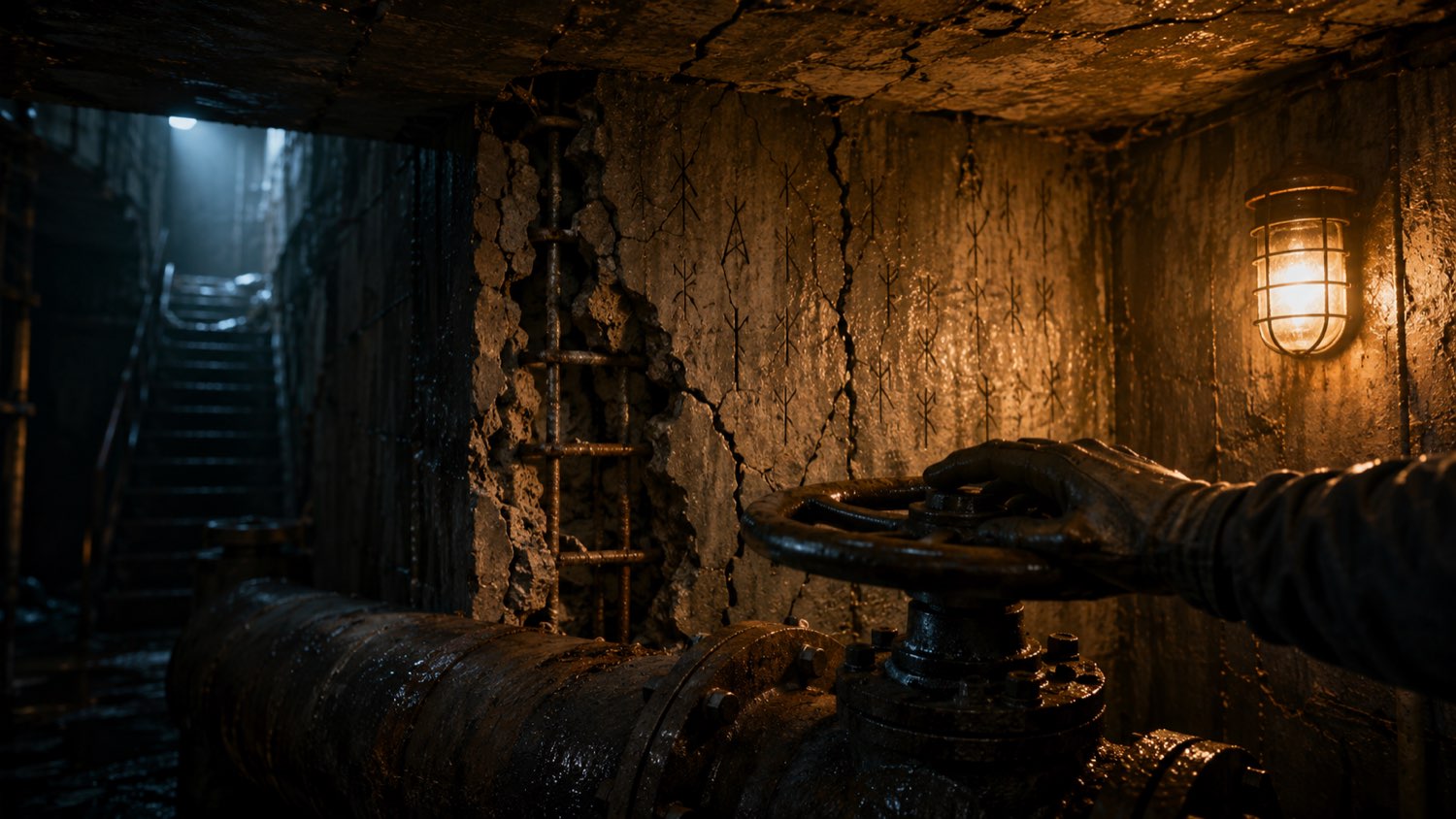
Camille stands in a room and listens to an algorithm explain what could be done with the water supply. Not a weapon, but a “vitamin.” Add it slowly enough and ten thousand people forget who they are, who they loved, and that anyone ever wondered what was outside. Nobody riots. Nobody has to be shot. The silo just quietly stops being a place where people remember.
The show hands her this as the merciful option. I love shows, movies, and books about how memory shapes who you are. I spent a novel on it myself.
Spoilers ahead for Silo season 3, episode 3, and light spoilers for my own book.
The Mercy Argument
The arithmetic is clean. If the digging for answers continues, the safeguard protocol triggers and everyone in Silo 18 dies. If the drug goes in the water instead, everyone lives. Ten thousand living strangers instead of ten thousand corpses.
Hard to argue with. Ha! So let me argue with it.
The episode has already stacked the deck against its own answer. It spends the hour on Jules, who has already been stripped, walking her own home and trying to rebuild herself out of whatever other people are willing to tell her about her. She gets almost nothing. It spends the rest of the episode on Sims, who watches that happen and goes home to make memories with his son on purpose, as though he could bank them somewhere out of reach. This episode is a whole hour of proving memory is the thing worth having. Then it asks Camille to take it away, and calls that kindness. Or, at least, survival.
I Gave My Priest the Same Button
In Sleeping with Demons, Raven is the last priest of a dead god in a world that already ended. The prophecy that could still save it calls for an empath and an angel. The angels are gone. The only empath left is Lilah, and Lilah is possessed, mad, and carving runes into her own skin on a rock in the courtyard.
He has one night, one lunar eclipse, and a book bound in the skin of the man who wrote it.
And here’s the rule the book gives him, delivered by an alchemist in a Middle Ages workshop who happens to be Raven’s own soul several lifetimes back: you cannot take away the thing that happened. You can only take away the memory of it. The events stand. The cellar still happens. The massacre still happens. What you can reach in and remove is her knowledge that it did, and that will cause her to be a different person. Hopefully, a person who isn’t haunted by her PTSD.
That’s Camille’s vitamin with better staging. Same button, fancier delivery system.
Sleeping with Demons — the last priest of a dying order has one night, one eclipse, and a book that lets him edit the past of the woman he loves. Available direct from the author → Or read it free in my online Library.
Memory Is Load-Bearing
So Raven uses the book to time travel and remove a memory. Repeatedly. Sometimes he changes her by erasing her trauma, but the book charges him every single time, too, and not always for the better.
The memory part I was working through by writing this book is how who we are and how we respond to pretty much everything are based on past experiences and memories of those experiences. If Raven can remove the memory of a traumatic experience that happened in college, she won’t be insane in his present and will become the one thing he needs to improve a post-apocalyptic world. If he can remove traumatic memories from her time in the military, she’s no longer emotionally unstable. But is that enough? If he can remove a particular trauma from her childhood, shaping her into an emotionally and psychologically healthy and untroubled woman, wouldn’t he do it? Because he loves her and wants better for her? It’s not quite a time-traveling version of Pygmalion, but it was my way of exploring how our memories make us.
That’s what I mean about memory being load-bearing. Camille thinks she’s redecorating. She’s taking out a wall and hoping the roof will stay up.
The Demon Is the Part Nobody Wants
Silo gives you someone to blame. You may not know which person to blame, but at this point in the story, you have your pick. There’s an “algorithm” in Camille’s ear. There are people who built this and decided how it would go.
When I was working through my story as a cathartic way of working through my own questions on memory, embodiment, how memories of events shape us, and how living in a different/healed body affects how we respond to new stimulus, I decided to turn the tables on who to blame. Because blame is the natural human reaction to things we can’t control. The demon in Lilah is not lying to Raven, and the text never lets him off by making it a liar. It tells him it is symbiotic, not parasitic. It says it has been an ally of his god through every one of his lifetimes. Then the story makes it prove it, in the worst way available: the thing living off her pain turns out to be the thing holding her together and protecting her.
Readers write to me about that. They are never neutral about it. If you’ve ever dealt with childhood trauma, you know that trauma can give you top-notch survival skills as an adult, though maybe some rather dark coping skills.
Nobody Asks Permission
Camille is not going to poll the silo. Raven never once asks Lilah whether she wants her own past edited out of her.
Both of them have excellent reasons, and Raven’s is genuinely better than Camille’s. In my opinion, anyway. His own priesthood engineered Lilah’s suffering. They arranged it and watched it happen. He’s cleaning up a mess his order made, and he loves her, and he is running out of night. He still doesn’t ask her. He decides what she gets to have been, and he does it while telling himself it’s love, and the book knows exactly what that is even when he doesn’t. So both Camille and Raven are problematic when it comes to consent of the people they’re impacting.
The note I kept getting while I worked on my book was that this made him unlikable, and couldn’t he get her consent somehow, offscreen, a line would do. No. That’s the book. It’s easy to rationalize away consent when you know the other outcomes are far worse.
For Camille, the question is whether it’s survival as an altered person without all their memories or death for everyone and they have their memories until a very short end.
For Raven, it’s not even a question, but what he feels is his mission to remove Lilah’s suffering.
The part I don’t put in a blog post is the last page. Sleeping with Demons ends with a reveal that reframes every rescue Raven made over that one night, including the ones he thought worked, and I’m not handing it to you here. It’s free in my online Library if you want it.
Camille will tell herself she did it for them. Raven told himself the same thing, and he had a prophecy to point at. Neither of them asked. That’s the tell. It’s always the tell.
But I worked it out in Sleeping with Demons. Obviously not entirely, though. How having or not having memories is a topic I explore often, including Veronica’s memories of her future that has changed in Altered Destiny or Lauren’s mother’s dementia in Rite of Reckoning, both of which you can read free in my online Library. I have a couple of amnesia-troped thrillers that explore the helplessness of not knowing.
But if I’m 100% transparent, my tangle with memory and its importance is something I keep coming back to since around the time my mom started to forget us and the misery of watching her despair as she knew she was losing precious memories and of watching the person we loved become someone we didn’t recognize long before she passed. This episode of Silo brought all those tumbling thoughts right back.
Related reading: Why We Crave Secret Libraries · Dark Academia and Me: When the Patterns Start Talking Back · The Payback Archives: Where Revenge Meets Healing in Contemporary Fantasy
Want more from the Secret Lives of Librarians? The whole series is in my Free Library, chapter by chapter.
For more on the stories behind my books, visit the Book Talk page.
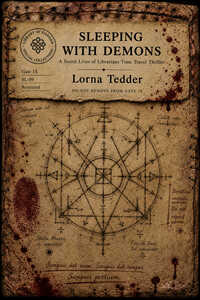
Dark fantasy in the Secret Lives of Librarians universe: one night, one eclipse, and every rescue has a price.
Visit the Book Page →
Read it free in my online Library →