

A love letter to magical archives, hidden collections, and the forbidden truths we ache to understand
There’s a reason we’re drawn to the idea of secret libraries.
Not the bustling public ones, though those have their own magic.
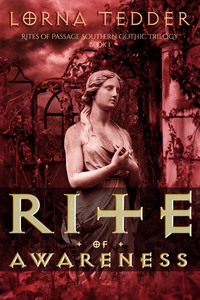
Rite of Awakening — Southern Gothic with bite, Book One of the Rites of Passage. Available direct from the author → Or read it free in my online Library.
I mean the other kind.
The ones tucked behind false walls, or hidden underground, or revealed only when you speak the right name in the dark.
The kind of library that doesn’t just keep knowledge—it keeps an eye on you.
Some part of us longs for the hush of candlelight on ancient pages. For books wrapped in warnings, for doors locked not to keep us out—but to ask if we’re ready to come in.
These aren’t just fantasies. They’re metaphors.
And sometimes, they’re real. I once traveled to Ireland on a research trip just to visit libraries—Trinity College’s Long Room, of course, but also smaller, more intimate spaces like the Marsh Library. That quiet, shadowed archive, with its locked book cages and scent of dust and vellum, became the inspiration for the Darbyshire Memorial Scholar’s Library in The Lost Teachings of Dead Monks.
I wish I could share photos from inside some of those libraries–but photography wasn’t allowed in some. And I was okay with that at the time.
Because deep down, we know that not all knowledge should be easy to find.
Some truths ask something of us.
A vow. A risk. A reckoning.
In The Lost Teachings of Dead Monks, secret libraries and forbidden books are more than narrative devices. They’re reflections of the characters’ deepest struggles—longings for clarity, for control, for the power to rewrite what feels unchangeable.
Lilah Burns, guardian of magical books, is sent to retrieve a Law of Attraction book she’s been warned never to open.
It promises everything.
Desire made manifest. Hope made flesh.
But the book also carries danger—the kind that doesn’t explode so much as echo. It doesn’t burn. It offers a reflection of you. It shows you the shape of your own mind and dares you to keep reading.
Because that’s what forbidden knowledge really is:
A mirror.
The secret libraries in my Secret Lives of Librarians universe aren’t filled with spells that shoot fire from fingertips.
They hold the kind of magic that rearranges you.
They ask questions like:
– What do you truly want? And what do you believe you deserve?
– What would you risk to undo your past?
– What if the thing that saves you also knows exactly what you fear?
These libraries don’t just store books.
They store belief.
And belief, once cracked open, rewrites everything.
Raven, a priest of a forgotten order based on Archangel Michael, performs a ritual to authenticate a book that could change fates. He fasts. He strips. He waits in silence until land, sea, and sky converge—because you don’t open sacred things casually.
When he touches the book, he doesn’t just read it—he remembers it. He knows what’s been done. Who touched it. What they feared. What they dared to wish.
It’s not literacy. It’s revelation.
And in that moment, the library isn’t just a place. It’s a threshold.
So why do we crave secret libraries?
Because we want somewhere to put our questions.
Because we want to believe that buried deep enough in the stacks, beyond the ordinary world, there’s a book waiting to answer us.
Because some part of us still hopes that if we just find the right spell, the right name, the right map of meaning—we might finally see ourselves clearly.
Not who we were told to be.
Not who we fear we are.
But something older, truer, and more whole.
We crave secret libraries because we are secret people.
Layered. Guarded. Grieving and hopeful.
Hungry for the kind of wisdom you don’t find on page one—but deep in the vaults, where only the brave go searching.
And maybe…maybe we crave these stories because they remind us that even the most forbidden book can be a key.
If we’re willing to read it.
For more on the stories behind my books, visit the Book Talk page.
Southern Gothic, Book One of the Rites of Passage: magick, betrayal, and a reckoning.
Visit the Book Page →
Read it free in my online Library →