

In recent years, two terms have found increasing relevance in fiction, fandom, and aesthetic theory: FicInt, short for fictional intelligence, and Dark Academia, the moody, intellectual subgenre where knowledge often comes at a cost. Though they arise from different traditions—one from speculative architecture, the other from cultural and aesthetic movements—they often converge in fascinating, shadowed hallways of narrative. Especially in mythic or occult-inflected work, they may even become inseparable.
But what exactly is the difference? And where do they bleed into each other?
What Is FicInt?
Fictional Intelligence (FicInt) refers to any imagined system of intelligence that behaves like a thinking entity—processing information, issuing judgments, or interacting with humans—without being a machine or software in the modern sense.
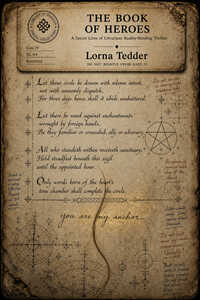
The Book of Heroes — a paranormal thriller where books are alive and the librarian is not what she seems. Available direct from the author → Or read it free in my online Library.
These intelligences might be:
* An enchanted book that answers questions aloud
* A magical library that reorders its shelves based on what a seeker needs
* A spirit-bound artifact that stores ancestral memories
* A priesthood’s oracle system that acts as a distributed, ritual-driven intelligence
FicInt thrives in worldbuilding where the technological is unnecessary or inappropriate. It’s most at home in worlds where knowledge is sacred, secret, or alive. This isn’t Alexa with a wand—it’s the kind of system that might require blood, belief, or silence to activate.
FicInt offers a model of intelligence that isn’t artificial, mechanical, or digital. Instead, it’s relational, symbolic, and often ritualistic—bound to memory, myth, and meaning.
What Is Dark Academia?
Dark Academia is harder to pin down because it’s as much an aesthetic as it is a genre. Think gothic universities, candlelit libraries, forbidden texts, secret societies, and morally gray characters obsessed with truth.
At its core, Dark Academia is about:
* The pursuit of knowledge as a dangerous or transformative act
* Romanticizing intellectualism while critiquing its elitism
* Characters who love too hard, study too much, and die too young
* Atmosphere over plot: velvet, rain, Latin mottos, dead languages
* It may contain magic, but it doesn’t have to.
In fiction, this often translates to narratives where the act of learning has consequences—sometimes existential, sometimes fatal. The best Dark Academia isn’t about school, but it’s about what happens when the need to know eclipses the need to survive.
Where FicInt and Dark Academia Diverge
* FicInt is a narrative tool. It can exist inside any genre, such as epic fantasy, occult thriller, solarpunk memoir. It’s a function that gives stories a particular texture, one where knowledge systems are intelligent, autonomous, or alive.
* Dark Academia is a mood, a theme, a setting. It thrives on aesthetic detail and the emotional charge of intellectual hunger. FicInt can live inside a Dark Academia setting, but Dark Academia doesn’t require FicInt.
In other words: FicInt is the ghost in the archive. Dark Academia is the obsession that opens the door.
Where FicInt and Dark Academia Overlap
The overlap is most vivid when:
* A character studies in an environment where the knowledge seems to study them back
* A thesis, a ritual, or a linguistic pattern unlocks something sentient
* A protagonist’s academic obsession leads them to uncover an ancient intelligence embedded in texts or traditions
* Libraries are not just background but are characters
This is where your spellbook talks back. Your footnotes summon gods. Your dissertation starts rearranging itself.
FicInt takes the central metaphor of Dark Academia—the pursuit of forbidden knowledge—and literalizes it. The system knows. And the system responds.
Why It Matters
In a world increasingly shaped by real AI, FicInt lets us imagine alternate epistemologies—ways of knowing that are spiritual, ancestral, or intuitive rather than computational. It brings back the sacred into systems of logic.
Dark Academia, in turn, grounds this with aesthetic urgency. It reminds us that knowledge isn’t neutral. It’s romantic, obsessive, dangerous, sacred.
Together, they allow for stories where truth is both personified and pursued, like a haunting and an awakening.
In My Work
Across many of my novels—especially in the Secret Lives of Librarians universe—you’ll find these forces intertwined:
* In The Book of Heroes, the archive has memory. The books remember who held them, and what lies were told in their presence.
* In my upcoming A Fiction of Demons, an artifact known as The Book of Names is a sentient book that grows as information is added. The artifact is a census of demons and the humans they previously and currently inhabit.
* In The Lost Teachings of Dead Monks, the reader becomes entranced by the Celtic knots on the page, which leads to the fruition of their highest hope or darkest fears. Whatever the reader believes will happen, does.
I don’t separate the system from the seeker. Every time a character reads, translates, prays, or even remembers—they’re touching a FicInt. Even the way they connect with the Universe and magical libraries. And when they do so by candlelight in some crumbling, ivy-covered monastery or a massive hidden archive that defies physics inside a closet—welcome to Dark Academia.
If you’ve ever read a book and felt like it was reading you back, you’ve experienced the fusion of FicInt and Dark Academia.
The question isn’t just “What do I want to know?”
It’s “What happens when the knowing wants something back?”
An anonymous tip opens the door to secrets.
Visit the Book Page →
For more on the stories behind my books, visit the Book Talk page.
A paranormal thriller where books are alive, knowledge is dangerous, and the librarian is not what she seems.
Visit the Book Page →
Read it free in my online Library →