

Back in the mid-90s, when I was first writing Access, my “research process” didn’t look anything like it does today. The World Wide Web was barely more than a curiosity—maybe 500 pages total if you believed the jokes at the time—and I was still prowling electronic bulletin boards in the middle of the night, looking for odd bits of information I could spin into a thriller.
That’s where I came across the snippet of Senate testimony that made its way into Access, my time-travel conspiracy thriller I drafted in ’95/’96. It read:
“Within the next 5 to 10 years, it would probably be possible to make a new infective microorganism which could differ in certain important aspects from any known disease-causing organisms. Most important of these is that it might be refractory to the immunological and therapeutic processes upon which we depend to maintain our relative freedom from infectious disease. A research program to explore the feasibility of this could be completed in approximately 5 years at a total cost of $10 million.”
— Department of Defense Appropriations for 1970, United States Senate Library From the Bookshelf
The Book of Heroes — a paranormal thriller where books are alive and the librarian is not what she seems. Available direct from the author → Or read it free in my online Library.
At two in the morning in 1994, I didn’t think twice about where it might end up. I wasn’t trying to write a history book or a policy analysis—I was writing fiction. My goal was to make my conspiracy thriller feel like it was stitched together from plausible scraps of reality. To me, this was a perfect example: a chilling detail that could anchor a plot about biological weapons and time-fractured futures.
What I didn’t realize then was how much traction that testimony would get outside of fiction. Years later, the quote began circulating in conspiracy circles as “proof” that the U.S. government had manufactured AIDS or other diseases. But if you look at the testimony in full, the context is very different. Dr. Donald MacArthur, speaking to the House Appropriations Subcommittee in 1969, was laying out what might be possible with advances in molecular biology and warning Congress about “technical surprise”—the danger of another country developing a weapon the U.S. wouldn’t be prepared to defend against.
He wasn’t requesting money to create such an organism. He was giving a feasibility assessment in response to questions, stressing that understanding the science was critical for defense. His point was about being prepared, not unleashing plagues.
But stripped of that context, the words are ominous. Which, of course, is why I used them in my novel. They carried weight, they created unease, and they gave the story a sharp edge of realism. As a novelist, that’s what I wanted.
Now, re-releasing Access after so many years, I’m looking back at that early research with a strange mixture of nostalgia and caution. Nostalgia for the era when a line of testimony dug up on an electronic bulletin board could ignite a whole plotline. Caution because what I used as fiction has since been wielded by others as evidence, without the nuance or context.
And maybe that’s the larger lesson here: stories—whether fictional conspiracy thrillers or Congressional testimony—can take on lives of their own once they’re set loose in the world. As a writer, I can’t control where they go. I can only be honest about where they came from.

A stolen bioweapon, a conspiracy that travels through time, and a framed agent who must save the world to clear her name.
Visit the Book Page →
For more on the stories behind my books, visit the Book Talk page.
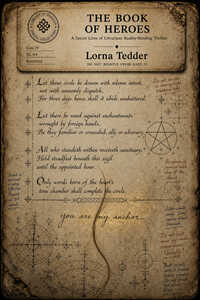
A paranormal thriller where books are alive, knowledge is dangerous, and the librarian is not what she seems.
Visit the Book Page →
Read it free in my online Library →