
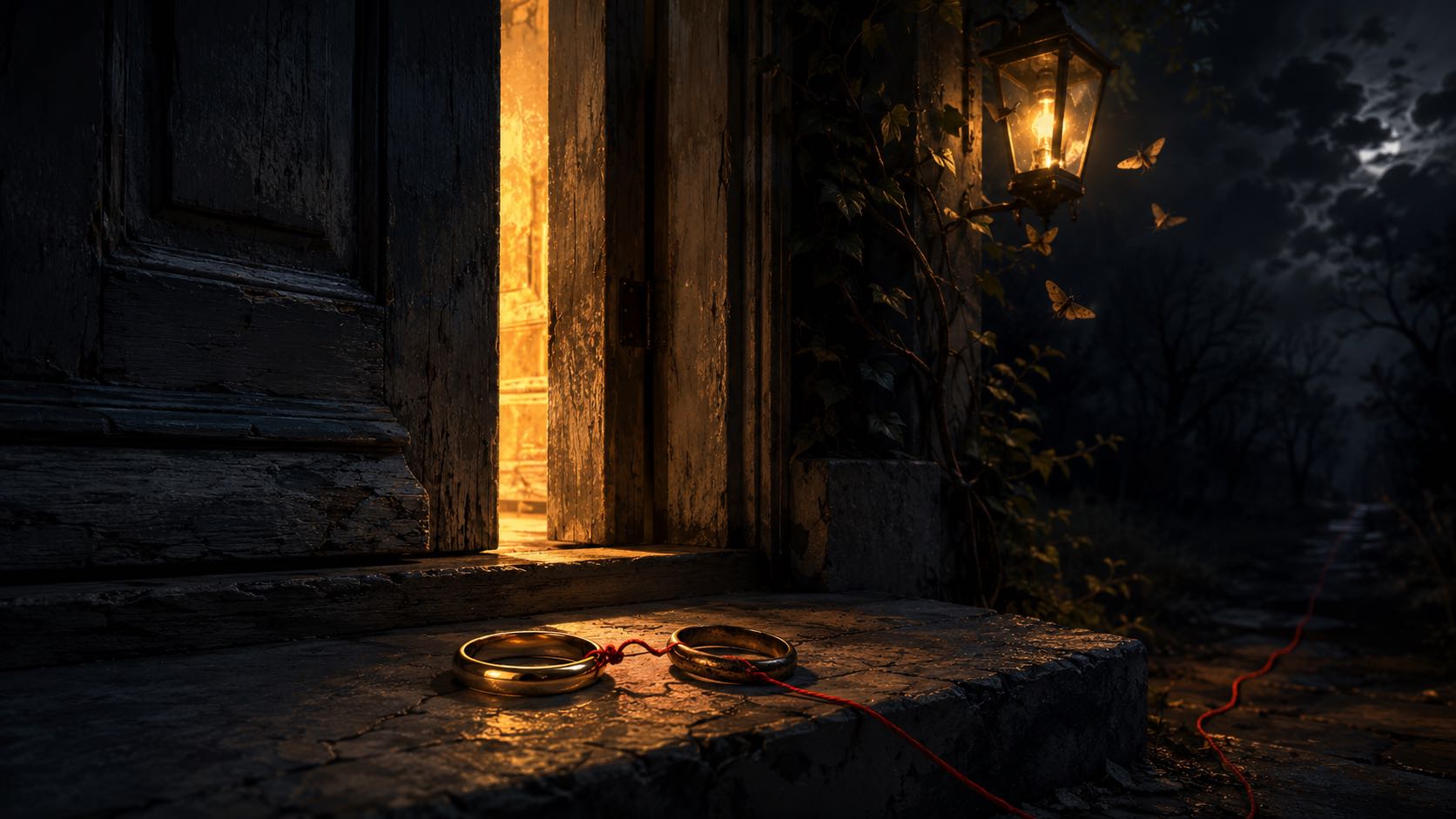
If someone’s Juno sits exactly on your Vertex, you probably didn’t need a chart to tell you. This is the connection that feels binding before either of you has agreed to anything. Most synastry aspects whisper. This one shows up at your door holding a vow.
Juno is the asteroid of marriage and committed partnership: the vow, not the flirtation. The Vertex is the point where fate seems to reach into your chart from outside. Put one directly on the other and you get what I consider one of the most potent fated-partner markers in synastry.
What Juno Conjunct Vertex Means in Synastry
The Juno person brings partnership energy to the table: loyalty, the instinct to build something official, the “what are we” question arriving early and refusing to leave. The Vertex person feels singled out by something that doesn’t behave like ordinary attraction. If either point is new to you, start with what Juno really means in astrology and how the Vertex works in synastry. This aspect is those two forces fused.
What makes the conjunction distinctive is the seriousness. Vertex contacts from Venus or the Moon can feel dreamy and open-ended. Juno on the Vertex feels contractual. There’s a weight to it from the first real conversation, a sense that this person is going to matter whether you planned for it or not.
A few practical notes. Keep the orb tight; this aspect earns its reputation at one or two degrees, not eight. And it matters whose point is whose. The Vertex person tends to experience the meeting as fate. The Juno person experiences it as recognition, the sense of having found the partner-shaped role they came to fill. Both of them are being worked on. Only one of them usually knows it first.

Vertex, Anti-Vertex, and the Fated Path in Astrology — where does fate enter your chart? The Vertex marks it—and the encounters that activate it. Available direct from the author →
A Fated Feeling Is Not a Compatibility Rating
Here’s where I part ways with most of what you’ll read about this aspect. A fated feeling tells you a relationship is significant. It tells you nothing about whether it will be good.
Two different people in my life have had their Juno exactly conjunct my Vertex: one became a three-year, drama-filled romance, the other one of the steadiest friendships I’ve ever had.
Same aspect. Same exactness. Wildly different relationships. That contrast is the whole point. Juno conjunct Vertex marks a threshold, but it doesn’t tell you what’s waiting on the other side of the door. Sorry to disappoint, but it’s the fated path, not the blissful path.
The part I don’t blog about — the full case studies and how each of these placements played out in real life — is in Vertex, Anti-Vertex, and the Fated Path in Astrology.
The Real Lesson Sits at the Anti-Vertex
Every Vertex has an Anti-Vertex directly opposite it, and that’s where this aspect does its actual teaching. The Vertex describes what happens to you. The Anti-Vertex describes what you can do about it.
When someone’s Juno lands on your Vertex, the lesson that follows is need versus want. You walked in with a list of what you thought a partnership should look like. This connection introduces you to what you actually require, and the two lists rarely match. Remember that Juno doesn’t operate like Venus: Venus is what you’re drawn to, Juno is what you commit to, and this aspect makes you learn the difference in real time.
That reckoning happens whether the relationship becomes a marriage, a friendship, or a story you tell years later. The aspect guarantees the lesson, not the outcome.
So if you’ve found this conjunction in a synastry chart, take it seriously. Just don’t mistake the knock at the door for a promise about what happens once you open it.
Related guides: Vertex in Synastry · What Juno Really Means in Astrology · The Difference Between Venus and Juno
Looking for all my Vertex posts? Try the Vertex & Anti-Vertex Page.
Curious about Juno beyond this one aspect? The Juno in Astrology Hub gathers all my Juno posts in one place.
Where fate enters your chart, who activates it, and what to do when it knocks.
Visit the Book Page →