
I played last night with Claude’s Fable 5 and it solved a 30+ year old problem for me. Plus a few other insights. Gotta say, the way it figured out the problem–as well as a recurring problem I see with people arguing over whether something is AI-generated or human-generated– was spot on and pretty much instantaneous.
Something wasn’t working right so I decided to do a bake-off between 2 Claude models because prior analysis (both human and AI) just wasn’t cutting it. This was for a novel I wrote 30+ years ago that was a unique premise at the time. Paranormal romance thriller with some fantasy elements I’d never seen used before. Of course, that was in the early 90’s, so I’m sure it’s been done plenty by now.

The Novel a Beta Reader Stole
I loved this story, and I’ve mentioned it a few times before about what happened with it and why it was never published. My editor at a trad publishing house had the 3-chapter proposal and synopsis and at the time we were all supposed to be trying to sell on proposal rather than write the whole book (efficient business sense), but I loved it so much that I just kept writing it and was close to being done. I figured by the time we went to contract, I’d be done and the book would be out in around 18-24 months. My first book had just come out and I was trying to build a name (well, pseudonym) for myself (well, publisher… bc the publisher owned it) at the time. This would’ve been my option book.
Before I could finish the book, I let a trusted friend read it as a beta reader. She was an award-winning author in another genre and a recognizable name in some circles.
She stole my book.
Concept. Location. Beat for beat. She made a minor character change within the protagonist’s family and changed their names. When confronted, she admitted she took my story and made it hers, then tried to gaslight me that she was paying homage to my UNpublished story, not stealing it. I have no idea if she published it–she intended to and had an idea of who would publish it–and I have no idea of what happened to her after I walked out and cut her out of my life.
I shelved the story. It was also the last conversation I had with her and I’ve rarely used beta readers since. This was such a special story to me and I just abandoned it because anything I published would be an also-ran to her version of it, which would have been published before mine. I’d also captured my then-3-year-old’s antics in the story, so that made it really personal to me.
Finishing It Thirty Years Later
So it’s been sitting on an old floppy disk (seriously) until last year. In 2025, after raising 2 kids, a divorce, a job change, a retirement, and multiple moves around the country, I found 150+ usable pages as well as the detailed synopsis and other partial chapters boxed up like a time vault. I decided to finish the manuscript, which I did fairly quickly.
But there was still something wrong. I’d had people look at it and tell me it was fine, and I’ve run it through a couple of AI tools to analyze, and they all have said it’s fine. Excellent even. But it still didn’t feel right and I couldn’t put my finger on it.
The Bake-Off: Opus 4.8 vs. Fable 5
So last night, while I was curious about the hype about Fable (I realize this post’s timeliness has the lifespan of a fruit fly), so I ran a bake-off between Claude’s Opus 4.8 and Fable 5.0. Opus gave me the best analysis I’ve had to date, but Fable was head and shoulders better at pointing to the problem and catching my nuances.
Writer Lorna 1993 is a different writer than Writer Lorna 2026. My voice has matured, just like my 3-year-old has grown up. Still the underlying voice, but I’ve changed, my experiences have changed, I’ve written millions of words since then, and I’ve changed as both a person and a writer. So the manuscript, finished 30+ years apart, read like 2 different authors. It was subtle, but enough that I just couldn’t get satisfied with it, even though I loved the 1990’s voice and the lack of technology from the era. Writing it now, anachronisms are hard and I kept having to remind myself that the protagonist couldn’t just text the private eye and his “computer girls” in the office or rely on GPS to find the inlaws she didn’t know existed.
Two Voices, and the 1990s Tells
#1. That insight of “one author, two voices” was dead-on. Fable told me specifically how to blend them into a cohesive voice in my final edit, mainly by adding specific changes in my craft to my 1990s voice. It also picked out some anachronisms and continuity issues that were extremely complicated and are always a problem with my paranormals and time travels.
#2. And this is the funny one that Fable pointed out: my 1990s voice was using what was considered excellent prose at the time, but what are recognized now as out-of-date tells. Not many– maybe half a dozen instances. Easy updates. The ah-ha moment? Those “90s tells” fall into the AI-ism bucket. Which makes sense, given that AI trained on books from that era. Yes, blame ME for em dashes, triplets, ellipses, and using the sense of smell at least once per chapter!
Not that Fable is the tool to use for everything. There are plenty of things I won’t use it for because I don’t need anything that fancy or expensive just to measure whether my manuscript conforms to my detailed synopsis or did I leave out something I’m blind to when I’m living it and writing it. Nuanced analysis is a good term for it.
Anyhoo. Just like that, I had my answers and a plan for fixing them. I was done within an hour after sitting on for yet another year. Now one more read-through, but this time, strictly for my pleasure.
A Southern small town gripped by secrets, murder, and the stormy pull of second chances.
Visit the Book Page →
For more on the stories behind my books, visit the Book Talk page.
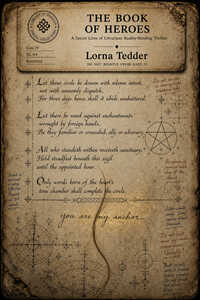
A paranormal thriller where books are alive, knowledge is dangerous, and the librarian is not what she seems.
Visit the Book Page →
Read it free in my online Library →