

I’d been doing a particular job for 25 years before I valued my expertise.
I’d grown up in a Southern Baptist culture where you didn’t point out your expertise, even quietly among friends, because it was considered bragging. Actually, it was okay for men in my culture to proclaim their expertise in their professional lives, but not for women. We were to sit quietly and hope someone else noticed and pointed out our knowledge.
After 25 years in my profession, people had pointed out my expertise often—especially with certain business techniques. My name had become synonymous with those techniques. And still, I didn’t announce it.
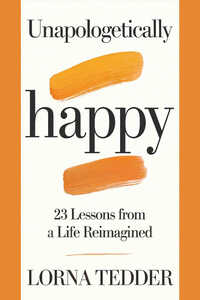
Unapologetically Happy — 23 hard-won lessons about reclaiming joy on your own terms. Available direct from the author →
The Chairs Against the Wall
As a quiet, mostly non-descript woman, I was often relegated to the chairs against the boardroom wall. I stayed there until someone at the table floundered and turned to me, or an occasional mentor insisted I pull up a chair and sit with the big kids.
The story I’d been telling myself was that I wasn’t expert enough. The story I was telling other people was… nothing. I wasn’t telling my story. Occasionally others did, but seldom me. I didn’t think of myself as an expert.
Not until…
A young man I’d trained for only months—who had done something under my guidance one whole time—was promoted into a position at three times my pay and heralded as the expert.
That was the moment something clicked. If he could call himself an expert, I certainly could.
After that, people began to recognize my expertise who hadn’t known before—because I hadn’t told them before. And let me tell you, it’s an incredible feeling when people you respect, the ones at the top of their fields, call you because they know you’re the expert in something they’re not.
What changed wasn’t my experience or my skill set. It was the story I was operating inside.
The Quieter Kind of Story
Most of us think of “stories” as something external—books, movies, things we consciously tell. The more powerful ones are quieter. They shape how we introduce ourselves, how we take up space, and what we assume other people see when they look at us.
They’re built early. From culture. From expectations. From subtle reinforcement about what’s acceptable and what crosses a line. Over time, they become so familiar that they feel like fact instead of interpretation.
And they don’t stay in the past. They continue to guide behavior long after the original environment is gone.
You can have years—decades—of evidence that you know what you’re doing and still move as if you’re waiting for someone else to confirm it out loud. That waiting can look like humility. It can feel responsible, even respectful. Underneath it, though, there’s often a script running that says: don’t claim this yet.
The problem is, no one is assigned the role of stepping in to correct that script.
Until Something Interrupts
From the inside, it doesn’t feel like a story at all, but rather, like personality or preference. It can feel like “this is just how I am.”
Until something interrupts it.
Sometimes that interruption is subtle. Sometimes it’s jarring. Watching someone with less experience step forward without hesitation has a way of highlighting what you’ve been holding back. Not because they’re more qualified, but because they’re playing by a different set of assumptions.
Moments like that create contrast. And contrast creates awareness.
You start to see that what you thought was a fixed truth might actually be a pattern you’ve been repeating.
Recognition vs. Being Known
Once that realization lands, things begin to shift. Not overnight, and not without some internal resistance, but steadily. You start to notice where you’ve been editing yourself. Where you’ve been waiting to be recognized instead of allowing yourself to be known.
Those are two very different experiences.
Recognition depends on other people noticing. Being known starts with what you’re willing to state clearly.
As that changes, responses from others tend to change too. Information that was missing is now visible. People have something concrete to respond to.
The Edge of an Outgrown Narrative
There can be a stretch of discomfort in the middle of this process. Long-held patterns don’t dissolve quietly. Stepping outside them can feel unfamiliar in a way that makes you second-guess yourself.
That feeling isn’t a sign that you’ve crossed a line. It’s often a sign that you’ve reached the edge of a narrative you’ve outgrown.
The story doesn’t disappear all at once. It loosens up and gets questioned. It becomes something you can revise instead of something you automatically follow.
And that’s where things open up.
Because the question isn’t whether you’ve been living inside a story. Everyone has one.
The real question is whether it still matches who you are now—or whether you’ve been carrying forward a version of yourself that no longer fits.
23 hard-won lessons about reclaiming joy, owning your story, and living on your own terms.
Visit the Book Page →