
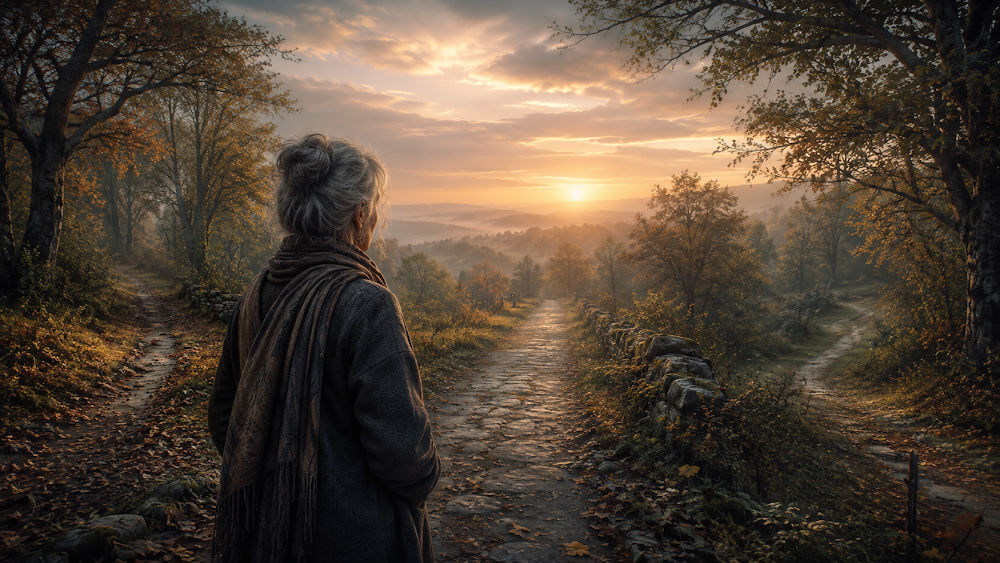
When I was about 12 years old, a grandmother figure in my life told me that, for the elderly, grief is a constant companion.
Of course, I didn’t understand what she meant, even though she’d said it right after the death of my childhood friend, because I didn’t understand cumulative effects. I thought I’d grieve the loss and move on. She knew better when she said that at 75, and lived another 20 years.
But now I understand, even though she was more than a decade older than I am now when she whispered those words to a girl trying to fathom loss in a time when the whole world stood open to me and my worlds of dreams. She had, by then, lost a dozen siblings, her parents, two husbands, and more friends than she could count. She’d lost two homes, a career, the prospect of ever becoming a mother, her dreams for the future with a man who loved her, her faith in others, and sometimes her faith in herself. And yet, she smiled and no one ever recognized the pain she shared with me.

Working Through Grief — a companion for the seasons of loss that don’t follow a calendar. Available direct from the author →
Cumulative Effects
I know now what she meant, and I understand what we all carry with us as we age. I’m not yet to the point my mom was in her last years, rising early to “check the obituaries on the computer.” Some mornings, the funeral home’s notices didn’t include someone she knew but, living for ninety years in a small town, she recognized the names more often than not. It hits me a little differently, and sometimes, when Facebook tells me it’s the birthday of a friend or former colleague, I’ll realize I’ve not heard from them in days or months and check their social media profile to find they passed unexpectedly. But I don’t check obsessively every day like my mom did.
Maybe I will in another decade or so.
But this grandmother figure in my life told me that you don’t so much get used to the accumulation of losses in life. Instead, there’s a numbness, she said, and a way of looking at what you still have while honoring what you don’t have anymore—and what you won’t have another chance to have. Some things won’t come your way again, and you can both accept that and still grieve what you lost as well as what you never had.
What I Carry Now
There are certainly both things and people I grieve daily, usually in that anesthetized sense of time moving on as it has for all existence, and with the stars looking down on me as they did for generations before and will for generations to come. I’ve lost five of the people I was closest to in these last five years or so, and some I’ve come to terms with and some I haven’t. Even more to politics and some to a divergence of values. Some deaths still haunt me, and probably always will.
There are things beyond the loss of loved ones that I still carry with me. There’s the loss of certain paths in life I always thought I’d explore but know now that those paths are closed off to me, or overgrown or no longer as lush as they once were. Like that grandmother figure from my childhood, I may one day grieve the loss of my independence or my health or a world where I felt I belonged that has now passed away. I may grieve stories I no longer wish to write or am able to remember. I may grieve a simpler time instead of excitement for new tech. I may grieve being able to teach the next generations anything at all.
I may grieve my visibility in the world. At times, I already do.
The Counterbalance
But this is the counterbalance to how we see the world when we’re young, when the constant companion isn’t grief but opportunity. Where every possibility is still out there, no matter how poor or uneducated or lacking in influential connections we may be. Where we still believe we are immortal because we’ve seen so little of mortality yet or real physical danger. Where we are still innocent in spirit.
Elderhood is the other side of that, where we reckon with the opportunities that never came or came and went. We take stock and miss the ones we built our worlds with or around. We don’t always move on.
And yet elderhood is not only the closing of doors. Sometimes it is the strange season when doors we thought had vanished appear again, half-hidden in the overgrowth.
Roads That Loop Back
But there are still open pathways for me at this age, or pathways that looped back unexpectedly. There are friendships long lost that have twisted back around through the overgrowth of years and re-emerged. There were forked paths where I chose one way of life over another. I so often took the road not taken by others for reasons that were valid, and I never thought I’d have that chance to explore the road not taken by me, but those roads have intersected my path again. I’ve had giddy fun with my untaken roads coming back to me—not me going in search of them. I’ve breezed down those highways that weren’t ever meant to be part of my youthful journey and aren’t meant to be that now. They’re not and never will be my commute to work, more like a joyful road trip, and I’m here for it.
Because one day, I’ll grieve the passing of those pathways, too, but I’d still rather have had things to grieve than have lived a life without that depth of feeling.
A compassionate guide through the darkest seasons of loss.
Visit the Book Page →