

There’s something almost electric about the moment a story arrives uninvited, demanding to be noticed.
Ideas never stop showing up at my door. They come while I’m making dinner on a Tuesday evening, leisurely walking through neighborhoods that suddenly make me wonder about the people who lived here a century ago, or watching rain trace patterns down my office windows that look exactly like the plot structure I’ve been trying to untangle for months. Some arrive as whispers, as a single image or phrase that lodges itself behind my eyes and won’t go away. Others crash in as full-formed plots, complete with characters who already know their own names and the exact shade of trouble they’re about to cause. The best ones are fully formed when I wake from a dream.
For the longest time, I worried about not being able to finish them all. The guilt sat heavy: all those notebooks filled with first chapters that trailed off into grocery lists, all those outlines that never became anything more than outlines. I thought my inability to focus on just one story until completion made me a failure, partly because I was writing a dozen proposals a year while I waited on super-slow editors at trad publishing houses to give me the go-ahead to finish what I’d started. They wanted to go to contract on a proposal or full manuscript, not an idea.
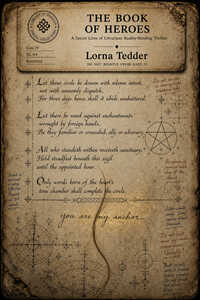
The Book of Heroes — a paranormal thriller where books are alive and the librarian is not what she seems. Available direct from the author → Or read it free in my online Library.
So I gave them business efficient proposals of three-chapters or more and a synopsis. It was like taking my characters out for a test drive and then leaving them in limbo for a couple of years while an editor got to choose which project she wanted, and I still had characters and stories I’d loved waiting for approval to finish. Editors even told me I’d given them too much to choose from, so they didn’t need to choose them all, just a percentage of what I’d given them.
Now I see the spark itself as part of my strength. Ideas came easy. So easy, in fact, that I didn’t appreciate them as much as others did. I talked openly about unusual plots and suddenly I’d find that a fellow writer had written a book with my storyline, my characters, and even my title. I lost a couple of friends that way, even after they admitted they had trouble coming up with ideas and suggested I should be willing to share them freely.
I learned not to share the idea before I had had a chance to use it myself. I learned that just because ideas are easy doesn’t mean they’re not valuable.
Over the past three months, as I’ve been studying my workflows with the intensity I usually reserve for researching historical details, my CliftonStrengths assessment has made Ideation impossible to miss. The notebooks scattered across my desk, the outlines saved in seventeen different folders, the half-drafts that multiply like rabbits, the blog fragments that capture moments of insight—they’re not signs of distraction or creative ADD. They’re proof of the creativity that keeps me moving forward, even when the path isn’t linear.
By gathering these scattered sparks into structured systems, I’ve found ways to respect the constant flow without letting it overwhelm the work that needs finishing. Some ideas move straight into active development: the novel about escape clauses hidden in soul contracts, the story of a house beloved by a banshee who keens when tragedy approaches, the new thread I’m weaving into The Payback Archives that changes everything I thought I knew about those characters.
Others wait their turn with surprising patience. I’ve learned to capture them quickly—in detailed outlines, character dossiers, or blog posts that explore the themes calling to me—and then return to them when the energy and timing finally align. There’s something deeply satisfying about opening a file from two years ago and finding exactly the story I need to tell right now.
The beauty of Ideation is that it ensures I never run dry, that the ink will never run out. Even when I’m deep in the tedious work of editing or wrestling with a revision that refuses to cooperate, I know there’s always another thread waiting to be picked up. And sometimes—often, actually—the sparks that wait the longest burn the brightest when I finally return to them, seasoned by whatever I’ve learned in the meantime.
If you’re someone drowning in too many ideas or if your hard drive is cluttered with beginnings that never quite became middles, don’t think of it as a creative flaw. Think of it as a treasury. You don’t have to build every house at once, but knowing you already have the blueprints means you’ll never run out of interesting places to live.
An anonymous tip opens the door to secrets.
Visit the Book Page →
A paranormal thriller where books are alive, knowledge is dangerous, and the librarian is not what she seems.
Visit the Book Page →
Read it free in my online Library →