

There’s a quiet kind of writing that doesn’t chase trends: it listens for what’s coming next. It’s like anticipating the seasons of next year.
Not the next trope. Not the next genre wave. But the next emotional need society hasn’t quite named yet. The deeper ache beneath the headlines. The psychic fatigue that’s been building in the collective. That’s the place I write from.
And lately, I’ve realized: my stories are thinking ahead to the Fourth Turning.
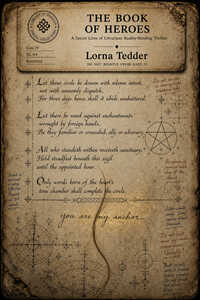
The Book of Heroes — a paranormal thriller where books are alive and the librarian is not what she seems. Available direct from the author → Or read it free in my online Library.
What Is the Fourth Turning?
If you’re not familiar with Strauss and Howe’s generational theory, the Fourth Turning is the final act in a recurring cycle of history. It’s the collapse-and-rebuild phase. The moment institutions fail, old orders crumble, and something entirely new begins to form from the ashes.
Every 80 to 100 years, we hit a societal crisis point. A reset. And the people who come through it—the ones who help rebuild—need different traits than the ones who tore it all down.
So I’ve been asking myself: What kinds of characters would survive that era—and not just survive it, but help shape what comes next?
Leaving the Antihero Behind
We’ve had at least a decade now of dark, complicated, emotionally constipated male leads. You know the type: brilliant but broken. Tortured, aloof, violent when necessary (and sometimes just for fun).
They served a purpose. During the late Third Turning—an era of unraveling, cynicism, and disillusionment—we needed those characters. They reflected our collective distrust. They burned everything down. They challenged hypocrisy.
But they don’t build what comes after.
The antihero doesn’t restore broken systems. He doesn’t raise up communities. He doesn’t offer safety, stability, or grace.
In a post-crisis world, we’ll need something else entirely.
I need something else entirely, whether to read, watch on my screens, or even to write.
Maybe It’s Just Me, But I Know What I Need
I won’t ridicule anyone else’s preference in heroes, but I suddenly find myself really tired of bully heroes, heroes who are violent toward women, and heroes who are narcissistic and manipulative. Maybe I’ve had too many of those men in my own life or maybe I’ve just had enough of the men in the news. They had their appeal for me at another point in my life, but no more. I just can’t write them as heroes anymore.
In the next year, you’ll start to see one of my bad boy protagonists replaced by a good guy protagonist from an alternate reality. And of course, you’ll see more of Raven, who truly embodies what I need in a hero these days.
Raven: A Different Kind of Hero
Raven is a quiet man. A scholar. A high-ranking priest in a forgotten order. He lives surrounded by dangerous books, secrets, and timelines that have already started to fracture. He’s not flashy. He doesn’t posture. And he never tries to prove himself through domination.
Instead, Raven holds the line.
He guards meaning when the world is losing memory.
He steadies others without demanding control.
He chooses presence over power, even when both are available.
His masculinity isn’t performative—it’s protective.
Not in a “save the girl” way. In a “stand beside her, trust her, amplify her” way.
He is, quietly and unmistakably, a Fourth Turning man.
How He Treats Lilah—and Why That Matters
This is the part I come back to most.
Lilah is an empath. She’s powerful, perceptive, emotionally layered—and in past relationships, she’s often been treated like a burden. Too intense. Too sensitive. Too much.
Raven never does that.
He listens.
He trusts her instincts, even when they challenge his own.
He holds space without trying to fix her.
He doesn’t need to contain her to feel strong. He doesn’t shrink from her grief or fear. He meets her with steadiness, not ego.
And maybe most importantly? He never weaponizes her vulnerability.
That, in itself, is revolutionary.
In a world where so many women have been gaslit, controlled, or minimized under the guise of protection, Raven’s care feels like a quiet antidote. It’s not performative respect. It’s embodied respect.
And it’s the kind of partnership I believe more people are craving, whether they’ve found the words for it yet or not.
Fiction for a Post-Crisis World
When everything’s falling apart, you don’t need another charismatic narcissist with a dark backstory.
You need someone who knows how to rebuild.
The Fourth Turning isn’t just about destruction. It’s about reformation. Emotional, spiritual, communal.
And the stories we tell now matter.
Because they shape what we expect from each other later.
Characters like Raven model a different kind of strength: one rooted in discernment, accountability, and care. The kind of strength that doesn’t make noise for its own sake, but quietly holds the world together while it reorganizes itself.
What I Hope My Stories Leave Behind
I’m not interested in writing heroes who win. I’m interested in writing heroes who hold. Who endure. Who remain kind in a collapsing world, not because it’s easy, but because it’s right.
Raven is one of those.
Even Lilah, with her fire and fracture, is carrying something forward.
I’m writing not just for the present’s anger, but for the future’s healing. For the world that’s coming next.
And I’m writing for me, and for the healing I need.
The Quiet Power of Characters Who Rebuild
We’ve had our rage. We’ve had our unraveling.
We’ve had our clever, charming antiheroes who mirrored our mistrust back to us.
Now we need something else. Now we need blueprints.
Raven is one of mine.
For more on the stories behind my books, visit the Book Talk page.
A paranormal thriller where books are alive, knowledge is dangerous, and the librarian is not what she seems.
Visit the Book Page →
Read it free in my online Library →