
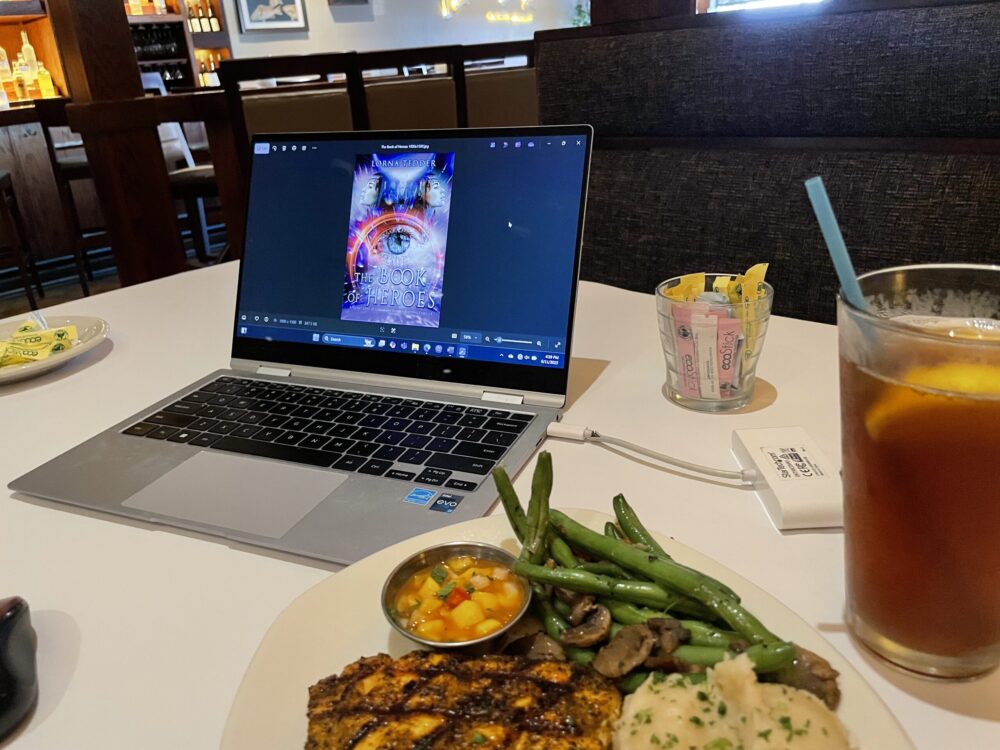
I never dreamed that Pete Hegseth would inspire me to write a novel.
Right after he took over as Secretary of Defense, I began hearing from former Department of Defense colleagues. Within a few weeks, they told me that some of the more inspirational stories featured on DoD websites had disappeared overnight. The rationale? These pages highlighted individuals hired, promoted, or recognized under DEI (Diversity, Equity, and Inclusion) initiatives. Stories celebrating “the first woman to…” or “the first minority to…” achieve a milestone were simply gone.
They had been erased from online literature, but not from reality.
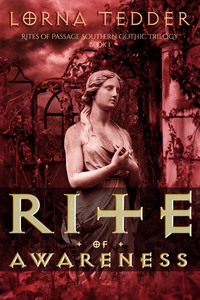
Rite of Awakening — Southern Gothic with bite, Book One of the Rites of Passage. Available direct from the author → Or read it free in my online Library.
If you know how my mind works, and how much I appreciate themes around memory and reality, you can probably guess what came next. The sudden disappearance of people some considered heroes—and others did not—led me to wonder:
– What if you really could erase one of these heroes from history?
– What would the world look like without them?
– What if the Tuskegee Airmen had never existed?
– Or the Navajo Code Talkers?
That’s how The Book of Heroes arrived almost fully formed. Like most novels in my Secret Lives of Librarians universe, it revolves around rare books and magical artifacts. In this story, one book stands above the rest: The Book of Heroes. A surgical weapon, crafted by leaders within the Daeganean priesthood, this book is used to erase the influence of specific individuals by removing their pages from history.
The rules are simple—and devastating.
The book includes heroes from 1915 to 2015. To eliminate one hero’s existence and impact, a priest simply tears out that person’s page. The closer to the present day, the subtler the change. The further back you go, the more reality begins to unravel.
Erase a modern hero, and a few lives shift. Erase someone from a generation ago, and you get a completely different world.
“We like to think that we have an impact on the world, but we’re told that in the grand scheme of things, we’re actually insignificant. Some religions reinforce that perspective. We’re not insignificant.” — The Book of Heroes
I had an absolute blast writing this book. It came fast—really fast—and I lost count of how many alternate realities emerged and collided as names disappeared from The Book of Heroes. I’ve loved time travel and alternate realities since I was a little girl, reading almost nothing but speculative fiction until my college days. In many ways, this book felt like coming home.
I’ve written time travel and multiverse stories before in the Secret Lives of Librarians, but this one felt different. It stayed within a single timeline—then explored how tiny differences, chance meetings, or micro-decisions could still reshape reality in ways no one anticipated. There’s no time travel into the past or future, but moving to realities where a certain person never existed so a particular interaction or influence never happened so the time line diverged at that point and Raven and Lilah live in the present after a hero’s disappearance.
As always, I learned things from the book while writing it. It gave physical form to ideas I’d been turning over in my head for years—like how a five-minute interaction with someone can alter the trajectory of your life.
And what haunted me most?
This: There are people we cannot abide—people whose cruelty seems inexcusable. Yet when you remove them from history, something else fills the void. Maybe better. Maybe a lot worse.
That’s a fundamental truth with any gap in life or with the reminder that nature abhors a vacuum. If we don’t fill those gaps with something good, something a lot worse can end up filling that gap and overflowing it.
But maybe the real heartbreak isn’t just the heroes we lost.
Maybe it’s the ones who never made it into the book in the first place—the ones who were never given the chance to change the world.
Have you ever wondered what your life would look like if just one person never existed?
Southern Gothic, Book One of the Rites of Passage: magick, betrayal, and a reckoning.
Visit the Book Page →
Read it free in my online Library →