

A cautionary tale from The Lost Teachings of Dead Monks on twisting desire into a cosmic boomerang
We’ve all heard it:
Visualize your dreams.
Speak it into existence.
The universe is listening.
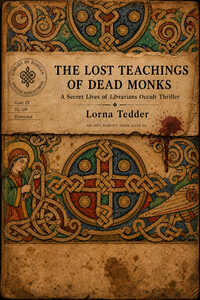
The Lost Teachings of Dead Monks — a magical library, forbidden knowledge, and a librarian facing the fears she has manifested. Available direct from the author → Or read it free in my online Library.
But what happens when the Universe listens not just to your dreams—but to your dread?
The Book That Listens, Amplifies, and Reflects
In The Lost Teachings of Dead Monks, the Law of Attraction is more than pop-spiritual advice. It’s a force—neutral in power, but perilous in practice. The book at the heart of the story, a tattered volume wrapped in warnings, doesn’t grant wishes like a benevolent genie. It listens. It amplifies. And it reflects back what’s already taking shape in your soul.
Not just what you want.
But what you fear.
“I think; therefore, it is.”
That’s the inscription Charlie finds in the Law of Attraction book—the Latin echo of his last hope. He believes it can fix everything. Rescue his reputation. Save his relationship. Rewrite what’s already unraveling. Allow him to have his cake and eat it, too.
But as he fixates on heartbreak, shame, and loss, those fears take root—and bloom into consequences he never intended. The book, described as a “tool of universal law,” doesn’t punish. It doesn’t bless. It simply reflects. What begins as a desperate prayer becomes a Law of Attraction feedback loop of unintended consequences.
Not because he used it wrong.
But because he brought the wrong energy to the ritual it creates for him.
Desire, Tangled With Doubt, Becomes a Curse
Desire, tangled with doubt, becomes a curse.
Lilah, too, falls into the book’s trance. Her fingers trace the Celtic knots and mirrored spirals, her thoughts slipping toward the old ache she rarely speaks aloud: that she’s cursed in love. Destined to be alone. That happiness isn’t something she deserves. And when the book listens, it doesn’t ask for clarification.
It doesn’t distinguish hope from history.
It simply manifests.
The Monks Who Knew This Well
The monks who created the book knew this well.
In the early days, they used it to deepen their spiritual practice—to meditate, to align, to connect. But over time, as fear of the future crept into their hearts, their visions turned dark. And the darker the fear, the more monstrous the result.
One monk, the last to use the book before the order dissolved, entered ritual in fear—and received a nightmare. Not from the book itself, but from the fears he brought with him.
The book didn’t create the horror.
It merely revealed it.
Raven, the pagan priest who guides Lilah through the truth of the Law of Attraction book, puts it simply:
“It’s never been about what the book can do, but what you can do with the book. Its power is that people believe their reality is formed in this book by using it as a tool, but it isn’t. It’s already formed in them.” — The Lost Teachings of Dead Monks
A Mirror, a Magnifier, a Map Drawn in Your Own Ink
And that’s the revelation.
The book is a mirror.
A magnifier.
A map drawn in ink made from your own thoughts.
So many of us turn to manifestation practices when we feel powerless. We light candles, chant mantras, create vision boards. Those things can be beautiful. Transformative, even.
But if the energy underneath is fear—if we’re manifesting from a place of lack, panic, or obsession—then we’re not casting spells. We’re casting shadows.
Manifestation Answers Your Wounds
The Lost Teachings of Dead Monks isn’t a warning against magic or belief. It’s a reminder that our intentions, if tainted by fear, can ricochet. That sometimes, in trying to call in our dreams, we accidentally summon our demons.
So what’s the lesson?
Mind what you carry into the ritual of asking for help from the Universe.
Because manifestation doesn’t just answer your words.
It answers your wounds.
When that power loops back around—like a cosmic boomerang—it won’t ask what you meant. Only what you believed.
For more on the Law of Attraction, see the Law of Attraction Hub.
A magical library, ancient forbidden knowledge, and a librarian who must face the fears she has manifested.
Visit the Book Page →
Read it free in my online Library →