

For the past couple of weeks, my body has been calling the shots. Sinus infection, throat infection, vaccine fatigue—it feels like I’ve slept more than I’ve been awake. I’ve lost whole stretches of days to rest, naps, and doctor visits.
And still, the work goes on.
Not in the full-force way I love. Not in twelve-hour stretches of editing or drafting. But in quieter, smaller bursts. A chapter revised here. An outline expanded there. A cover mocked up while waiting on lunch or at the doctor’s. An idea dictated into my phone while walking slowly, trying to coax my lungs back into rhythm.
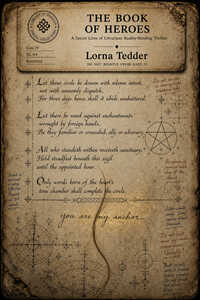
The Book of Heroes — a paranormal thriller where books are alive and the librarian is not what she seems. Available direct from the author → Or read it free in my online Library.
Over time, I’ve learned to sort my work into categories that match my energy. When I’m foggy-headed and running on fumes, I do low-cognitive tasks: fixing a broken link, resizing a book cover, updating Airtable with links, cleaning up file names, or creating small pieces of art. Things that don’t require deep creative fire but still move my projects forward and usually things I can’t automate or fall into the onesie-twosie frequency.
When I’m clearer but still not at full strength, I lean into medium-level work: editing chapters, fleshing out outlines, or polishing a blog post.
And when my mind feels sharp and my body steady, that’s when I reach for the heavy lifting—deep revisions, drafting new stories, or building complicated dossiers.
The key is this: I don’t set up a rigid plan for next week. I don’t block out my calendar with what I “should” be doing. After forty years of working that way, I’ve let it go. Now, my body and energy dictate the rhythm. Some weeks, I can sustain long stretches of creative fire, twelve hours or more at a time. Other weeks, especially when sick, I work in shorter bursts or just keep things moving at a maintenance level.
This doesn’t mean I’m unproductive. Quite the opposite. It means I’m working with myself, not against myself. It means that even when I’m sick, the current of my creativity still flows—sometimes as a flood, sometimes as a trickle, but always forward.
Being sick has reminded me that creativity isn’t about rigid schedules or constant output. It’s about listening. It’s about persistence. It’s about trusting that today’s low-cog tasks are just as important as tomorrow’s deep-dive revisions. Because they all add up.
And they all count.
My Energy-Based Workflow
I don’t force a weekly plan or block out my calendar. Instead, I let my energy tell me what’s possible that day. Here’s how I sort my tasks:
Low Energy / Low-Cog Tasks
- Update Airtable (where I keep my “Book Factory”) with links, prices, or notes
- Resize covers or prep images, when I can’t do these through an automation
- Clean up file names or sort folders, when I can’t do these through an automation
- Quick fixes on the website
- Light brainstorming or dictating ideas while walking
Moderate Energy Tasks
- Editing chapters
- Polishing blog posts
- Formatting ebooks
- Expanding outlines or dossiers
- Uploading ebooks or audiobooks
- Creating or tweaking Reader’s Guides
High Energy / Clear-Headed Tasks
- Drafting new chapters or stories
- Deep structural revisions
- Complicated automation or dossier building
- Designing full book covers or web pages
- Creative strategy or long-form content
- Any intense, focused work
The rule: everything counts. Even the smallest low-cog task keeps the creative current flowing.
This isn’t another set of rules; it’s your permission slip to break them and find happiness on your own terms.
Visit the Book Page →
A paranormal thriller where books are alive, knowledge is dangerous, and the librarian is not what she seems.
Visit the Book Page →
Read it free in my online Library →