
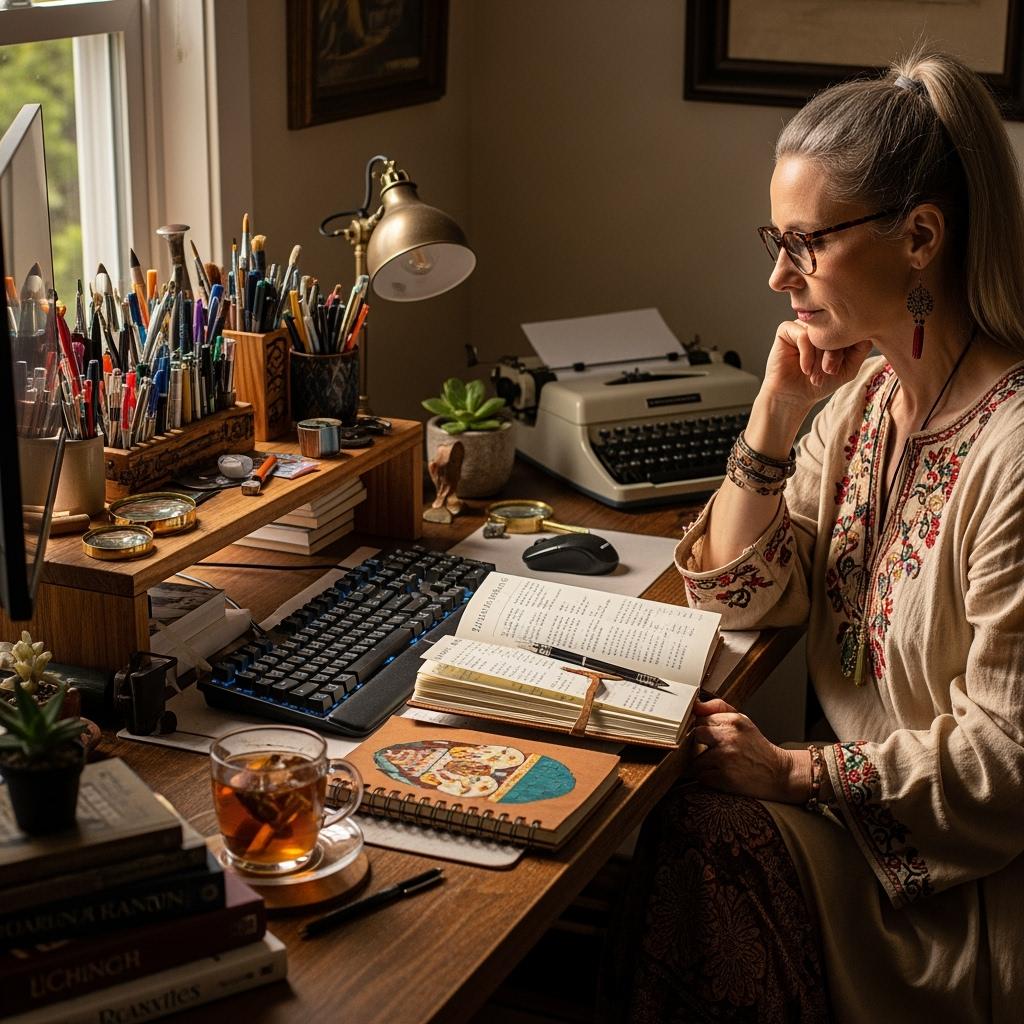
There’s something almost rebellious about refusing to follow the formula. Or refusing to write to market.
I’ve been really good at using my Individualization CliftonStrength to customize work plans and professional development for others. Who knew I could apply it to myself?
Every time I’ve tried to squeeze myself into a “proven” system, it’s ended the same way: frustration, wasted hours, and the gnawing sense that I was working for someone else’s rhythm instead of my own. Over the past three months of a productivity experiment, I’ve been examining my workflows with the kind of attention I usually reserve for untangling plot threads. Everything from how I publish books to how I draft these very blog posts has come under scrutiny.
In the process, I’ve been rediscovering how strongly my CliftonStrengths shape the way I work and using what I’m learning to improve. My Individualization strength, my #1, doesn’t just show up in how I craft characters—it drives this constant need to tailor systems to fit me rather than forcing myself into boxes that were built for someone else’s brain.
In practice, that means I customize everything. I’ve taken generic productivity tools and prompts and reshaped them into what I call “easy buttons”—systems that respond to my needs in the moment rather than demanding I contort myself to match their logic. I’ve turned sprawling archives of half-finished material into living ecosystems I can dip into without the crushing weight of guilt. I’ve learned to craft prompts and templates that echo my natural rhythms instead of fighting them at every turn.
Each of these choices takes time up front. I don’t want to mislead you into thinking there’s not an upfront investment. But the payoff feels enormous. A single tailored checklist can save me hours of decision fatigue. A personalized template keeps me aligned with my voice instead of mimicking whoever’s currently yelling in my ear. Even something as small as creating my own naming convention for files means I no longer lose precious creative energy hunting for missing pieces in digital haystacks.
The beauty of customization is that it honors the quirk. Yeah, my quirks. The things that make me write the way only I can write, think the way only I can think.
There’s a moment in my Secret Lives of Librarians universe where the protagonist realizes she’s been trying to fit into a world that was never designed for her particular kind of magic or the traumas she’s endured. She stops apologizing for her differences and starts wielding them instead. That’s what happens when we stop punishing ourselves for not fitting into systems that weren’t built for our specific brand of creative chaos.If there’s one lesson I’d pass along, it’s this: stop trying to fix yourself to match the system. Adapt it. Bend it. Break it apart and rebuild it if you must. Your quirks aren’t flaws in the machine—they are the machine. And when you finally honor that truth, everything begins to flow with the kind of ease you’d forgotten was possible.
When reality-shifting pages erase people from existence, empathic librarian Lilah and the last priest must save a cursed grimoire—and themselves.
Visit the Book Page →

23 life-coaching tips to motivate you and give your life direction.
Visit the Book Page →