
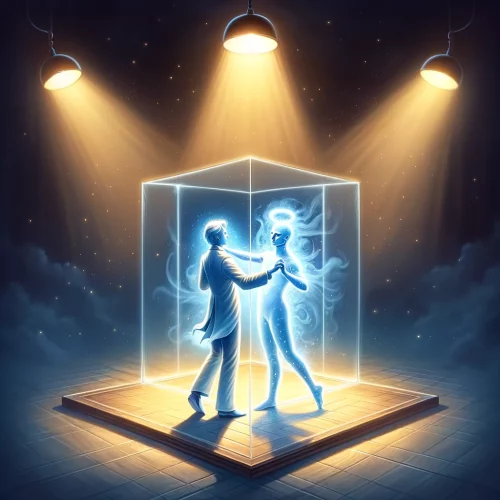
Exploring the complex dynamics between empaths and narcissists reveals a fascinating interplay of emotional depth and surface-level self-absorption.
For some reason, empaths and narcissists have become hot keyword searches for this website, no doubt because I’ve so often talked about my dealings with empaths (the real kind that feel others’ feelings) and narcissists (the real ones who’ve been diagnosed by a professional, not people who are thinking of themselves and not you). If that’s what brought you to this post today, then perhaps I can shed some light on the two and their differences, based on my own experiences and observations. And yes, my experiences and observations–because anything else would be hearsay or someone else’s experience.
Real empaths feel too much. Real narcissists don’t seem to feel anything, or at least not in regard to others’ feelings. Showing your vulnerable side to a narcissist in an attempt to explain how his or her behavior might be hurtful will just invite more abuse, whether they’re in a relationship with you or you just happen to be the latest fixation of the narcissist who’s trying to make his or her own deep personal pain go away. Narcissists–at least the ones I’ve had experiences with–have a deep self-loathing. That might seem incongrous with their arrogant me-me-me-me-me-me-me attitude on display, but they have a tremendous sense of unworthiness that causes them to lash out at others in an attempt to increase their self-esteem. The ones I’ve known personally have an unfathomably deep sense of shame about something in their lives, usually in early childhood. I don’t know if it’s true of all narcissists, but the ones in my observation have abandonment issues with at least one parent, all stemming from something that happened when they were pre-schoolers, and have ensured they never get close enough to anyone again to feel abandoned.
Whereas the narcissist doesn’t connect well or much with others, the empath connects too much. The empath literally feels what someone else feels, whether it’s strong emotion or physical pain. I know because I am one, and I’ve made friends with other empaths over the years because it’s helped me deal with my difficulties. I have frequently felt a heavy pain in my chest when someone was near– and by now I can tell the difference (most of the time) between someone else’s physical pain and my own–only to find out that the person was having heart trouble. I’ve felt the inner anxiety of a person, the hidden stresses behind the smile, the anger no one else could see right before someone lashed out or became violent. I can explain it in several ways but if you don’t believe that one person’s feelings can be perceived by another, then no amount of scientific, psychological, or spiritual explanation will convince you. All I can tell you is what I’ve experienced myself, and it’s both a blessing and a curse.
Being an empath is at its most incredible when you’re in a loving, bonded relationship and giddy with the newness of discovering each other. It’s at its worst when you let your own feelings be overshadowed by someone else’s, particularly when those feelings are loaded with anxiety or grief. It’s for these reasons that I save myself the agony of hanging out around airports and medical facilities–too much intense negative emotion by others leaves me feeling…rubbed raw. But even worse for an empath is being in a relationship with a narcissist.
Non-narcissists on a negative or depressed binge are bad enough but the diagnosed narcissist bonded with a feeling, sensitive empath? Hell for the empath. The empath, for example, may be looking forward to celebrating their first anniversary. She wants to go out for a picnic dinner at sunset. She’s exhausted after being cooped up with a sick baby for the past week but the grandparents are babysitting, the picnic basket is packed, she’s put on her prettiest dress, and she’s so happy and excited as she waits for her husband to come through the door after work. He’s been promising her this outing for the past month, and she can’t wait. Then hubby walks in and plops down in front of the TV to watch the news. He’s sullen, unhappy. He tells her he doesn’t want to go out for the picnic. He’ll just eat the sandwiches while he watches TV. He tells her he’s tired. She knows. She can feel how tired he is because she’s an empath who feels physical feelings of others. He tells her his work day was long and disappointing. She knows it was disappointing–she can feel his inner despair–because she’s an empath who can feel emotional feelings of others. After eating his share of their anniversary meal in front of the TV, he announces that he’ll cheer himself up by going to his best friend’s house for the next couple of hours. She’s hurt by his behavior, yes. Perhaps she’s angry–but that will probably come later. Right now, in his presence, she feels what he does and it all makes perfect sense that he go to his friend’s to feel better. It makes perfect sense that he doesn’t want to celebrate with her because he’s tired or in a bad mood. She can see the event so vividly from his point of view that it overpowers her own wishes for herself.
I’ve noted that many empath-narcissist relationships echo codependent-abuser relationships. (That’s not to say that all empaths are abused or that all codependents are abused, etc,etc.) I cannot think of a single empath I know personally who isn’t or didn’t used to be codependent–in other words, a people-pleaser/self-sacrificer/martyr. I’m a recovering codependent and I must stay very conscious of doing things for myself and taking care of myself or else I’ll give up everything I want to make someone else happy. I’m more me-focused now that I’ve ever been and happier than I’ve ever been because I’m no longer putting everyone else ahead of me to the point of self-annihilation, but it’s hard for me to do. It’s not that I want to control people as many codependents do, but I want to control outcomes. I want everyone to be happy and fulfilled, even if that means I have to give up what I want again and again.
One of the most gifted (or most cursed) empaths I know is in a relationship with a female narcissist. When he is away from her, such as at his job or on a business trip, his true personality comes out. He’s a gentle, happy person who spends his time making others feel good, too, or talking them through difficult times. When he goes home to her, he becomes a mirror to what she wants. I’ve seen him become irrational whenever she’s been in one of her irrational snits, to the point of sounding as if he’s channelling her. It becomes her words, her emotions pouring out of his mouth. If she feels insecure or angry or no matter how abusive she is toward him, he immediately understands and sees himself in the way she does. I’ve asked him how he can flip-flop between being so calm and collected with us and then seem “possessed” by her when she’s around, and he explains it that when she thinks he’s a horrible person and really feels that he is, then he does, too, because he can feel her feelings that he’s a horrible person. Her feelings may not make sense but when she’s in them–or when he’s in them–they make perfect sense to the two of them. Like many empaths, he meshes with the personalities of the people he’s with and becomes like them, losing himself in someone else’s emotions. When he’s with her, he sees her, the world, himself, everything from her point of view…and as an abuser, she makes sure she’s with him as much as possible so he doesn’t get any time away from her to sort through his own feelings. I’ve seen this stay-within-my-presence-so-I-can-remind-you-how-great-I-am behavior from most narcissists in relationships, though it’s not necessarily a sign of narcissism but more one of insecurity. If the empath can be controlled by being in a narcissist’s presence and the narcissist can feed off the empath’s understanding and devotion, then the relationship becomes very sick very quickly.
Both empaths and narcissists have a big problem with boundaries. The narcissist has never met a boundary he/she didn’t cross and the empath has no idea what a boundary is. Narcissists tend to be exciting, dynamic, charismatic people and it’s wonderful to be around them–initially. But the relationships they form are shallow connections and they’ll move on to the next person who’ll make them feel good without much more than a second thought such as one narcissist I know who goes from marriage to marriage to marriage and leaves just before the thrill dulls. They’ll do things to others that are criminal (the one guy who arranged to have his wife gangbanged) if there’s a thrill in it. They’ll run away (literally or figuratively) if the connection verges on becoming too emotional or too risky of showing their deepest vulnerability. They’ll breach polite etiquette (the dinner guest who went through my things and donned my sexiest underwear in front of other guests, family, and me).
For narcissists, if you set a boundary, they will try to cross it. I’ve been stalked by narcissists and they need to have attention on them, constantly, and will cross the boundaries from creeping to harassing just to remind you they’re still there. I’ve told narcissistic men not to pursue me because I wanted absolutely nothing to do with them ever again because of their past mistreatment–and wow, what a challenge it’s become to get and keep my attention then!
For empaths, setting boundaries is the only way to live with the curse of feeling what others feel and getting lost in others’ points of view. The only way to stay grounded and true to your own personality, your own needs and wants, your own dreams is to learn to set boundaries and not let others cross them.
Here are a few things that have helped me as an empath:
1. I hang out with positive people and people whose attitudes are more similiar to mine when I’m alone. I stay far away from negative people and drama queens, if I can.
2. I don’t make instant decisions after a persuasive argument from someone else. Too easy for me to say yes immediately because I can so understand their point of view and excited feelings
toward a subject without being sure that those are my feelings, too. If I decide based on someone else’s excitement, I tend to regret it.
3. If I’m inclined to make a quick decision, I stop to ask myself if this is in-line with my wants, needs, dreams, personality. If I get a hell-yes from inside with no tiny niggling doubt, then it’s usually a good quick decision. If I’m overwhelmed by the feeling to say yes but something inside is contradictory in any way, then I’m likely being swayed by someone else’s enthusiasm and not my own. This is such a matter of boundaries!
4. If I find myself becoming lost in someone else’s feelings, I spend a day or two away from that person. If that person has a problem with my being out of their influence for a day or two, then it’s even more important for me to take a little break and re-assess my own feelings.
5. If I’m dating someone who has had many, many, superficial relationships and is over 40, I take an emotional step away.
6. Once I realize someone fits the pattern of Narcissistic Personality Disorder–or outright tells me he’s been diagnosed!–I stay the hell away.
7. If I start to feel depression or despair when things are going well for me, I stop and ask myself where it’s coming from. The day I realized I was an empath was after a horrible experience where I took on the feelings of a suicidal woman I was helping–and suddenly realized that my deep despair and even the way I phrased my despair was out of character. I know that my true self is serene and calm, so when I become emotionally turbulent, I always (now) look at what’s going on in my life. If I’ve just been through a breakup or a medical scare, then yes, those turbulent feelings are probably my own. If life is great for me but I’ve just had a chat with a colleague who is distraught over her son and now I’m depressed, then that turbulence is usually something I’ve brought home with me from having a close connection with my colleague. Once I can distinquish my own feelings from the feelings of others, I can break the connection…if I want. Sometimes, if the feelings are very strong, I don’t realize at first that they’re not mine. That may sound strange to the non-empath, but being able to tell the difference and know that boundary is crucial to an empath’s happiness.
8. I never apologize for my own emotions. They are my best guide to living the life I want, but I must be aware of the difference between my emotions and someone else’s I’m bonded with. If I am feeling good, feeling at ease, feeling happy, then my life is on-track.
This post is included in my non-fiction book, Shielding Techniques for Empaths: A Highly Sensitive Person’s Intimate Guide to Protection Against Negative Energy and Overwhelming Emotions.
